

BS 7671 / ESC best practice

Electrical Danger Notification App for Electricians

Fill it in on site, sign on screen, and send a professional Danger Notice PDF before you leave the job.

Free to build · Send it with a 7-day free trial

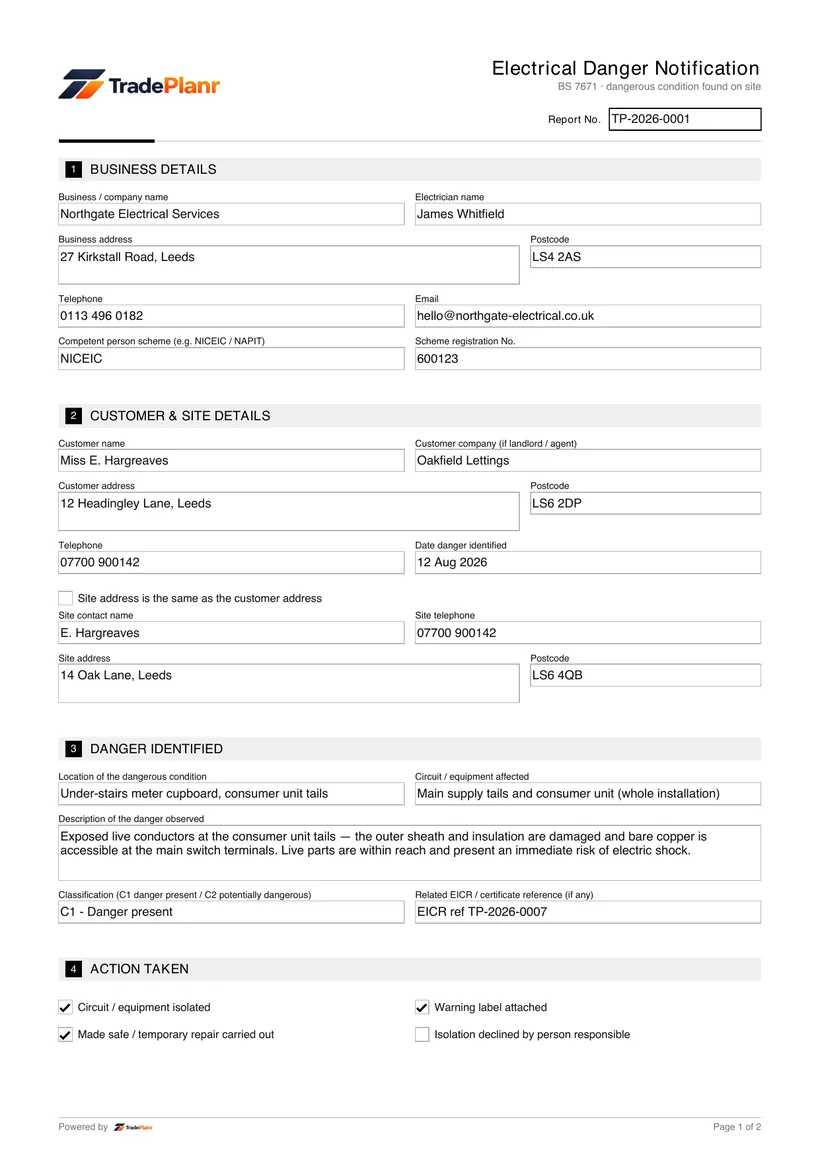
An Electrical Danger Notification is the best-practice form, promoted by Electrical Safety First (formerly the ESC), that an electrician issues when they find a real and immediate danger during an inspection or other work. It gives the person responsible for the installation written notice of a C1 "danger present" or C2 "potentially dangerous" condition, describing the defect and the action taken or recommended.

The notice matters most when a C1 is found. Best practice is to notify the responsible person in writing immediately, make the danger safe where you are permitted to, and get a signature acknowledging the advice. If the customer declines isolation, the signed notice is your record that the danger was clearly explained, which protects you if the defect later causes harm.

TradePlanr lets you raise the notification on your phone the moment you find the danger. Record the location, classification and circuit affected, note whether it was isolated or made safe, capture the responsible person's signature and email a professional PDF on the spot. It is TradePlanr's own template, stored against the job alongside any related EICR.

What it covers

  • Client, property and installation details for the premises concerned
  • Location and description of the danger identified
  • C1 or C2 classification of the observed condition
  • The circuit or equipment affected and any related EICR reference
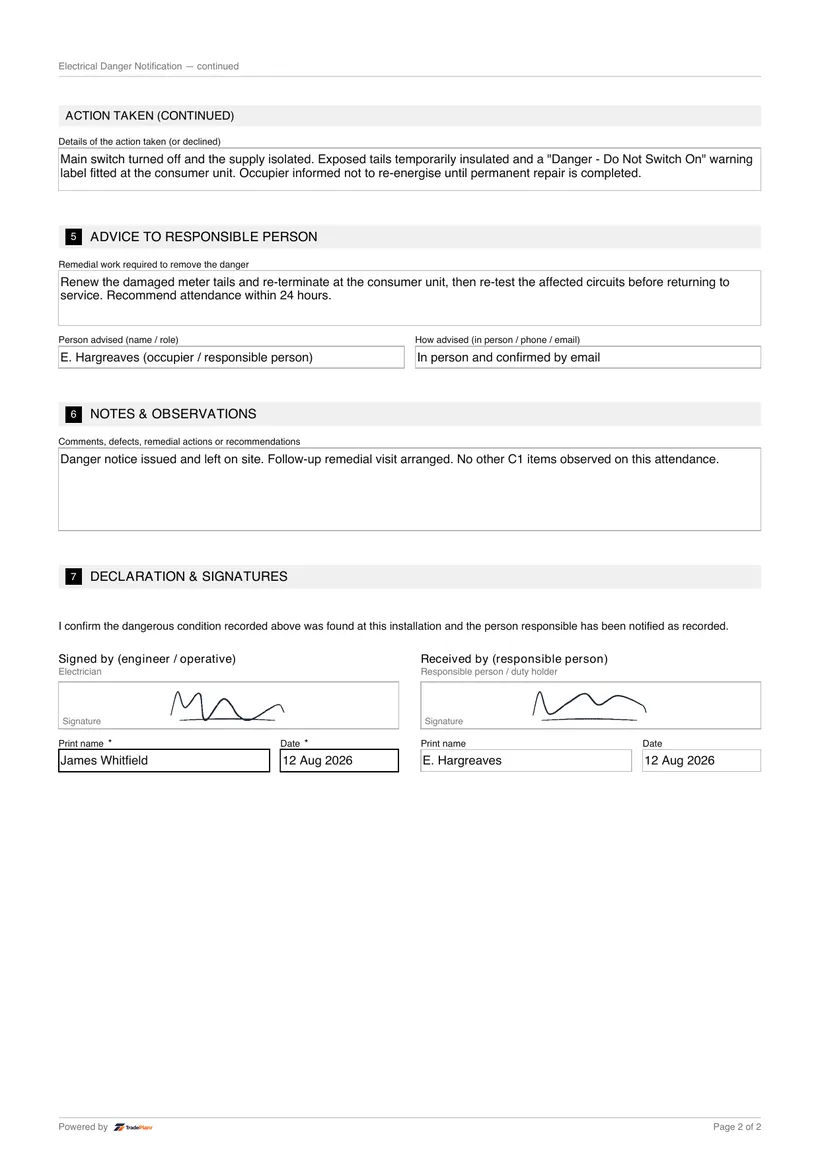
  • Action taken, such as isolated, warning label attached or made safe
  • Record of isolation being declined by the person responsible, where that occurs
  • Advice to the responsible person on the remedial work required
  • Who was advised, how they were notified and their signature

When it's required

Whenever a C1 "danger present" condition is found during an EICR or any other work, best practice is to notify the person responsible in writing immediately and obtain a signature acknowledging the danger and the advice given.

A notification should also be considered for C2 "potentially dangerous" conditions, so the responsible person has clear written advice on the urgent remedial work required.

If the customer declines isolation of a dangerous circuit or equipment, the signed notice records the refusal and the advice provided, protecting the electrician if the defect later causes injury or damage.

How to issue it in TradePlanr

  1. 1

    Record the danger identified

    Open a danger notification, add the client and property, then describe the danger, its location, the C1 or C2 classification and the circuit affected, with any related EICR reference.

  2. 2

    Log the action taken

    Record what you did on the spot, whether the circuit was isolated, a warning label attached or the danger otherwise made safe, or that isolation was declined by the person responsible.

  3. 3

    Advise the responsible person

    Note the remedial work required, who was advised and how, so the notice doubles as clear written advice on putting the danger right.

  4. 4

    Capture the signature

    Have the responsible person sign on screen to acknowledge the danger and the advice given, which is especially important if they decline isolation.

  5. 5

    Send and store the PDF

    Generate a branded PDF, email it to the customer immediately and keep your copy filed against the job alongside any EICR it relates to.

Issue this certificate from your phone or the web

TradePlanr generates this and 45+ other gas, electrical, oil, plumbing and renewables certificates as proper PDFs — filled on site, signed on screen and stored against the job. Works even with no signal. Free to start.

Frequently asked questions

What is the difference between C1 and C2?

A C1 means danger is present, with a risk of injury, and immediate action is required. A C2 means the condition is potentially dangerous and urgent remedial action is needed. Both warrant written notification to the person responsible.

Can I isolate a dangerous circuit without permission?

No. You need the permission of the person responsible for the installation before isolating. If they decline, you should record the refusal on the danger notification and have them sign to acknowledge the advice given.

Does a danger notification replace an EICR?

No. The notification pairs with the EICR or other work during which the danger was found. It gives immediate written notice of the specific C1 or C2 condition, while the EICR reports on the installation as a whole.

Why does the notification need to be in writing?

Written notification with a signature is your documented evidence that the danger was clearly explained and advice given. If the customer declines isolation and the defect later causes harm, the signed notice protects the electrician.

Can I issue a danger notification from my phone?

Yes. TradePlanr lets you record the danger, classification and action taken, capture the responsible person's signature and email the PDF on site, the moment the condition is found.

Start Now — It's Free

Free to start · No card · No download needed — works in your browser

Download on the App StoreGet it on Google Play