

IET Code of Practice

PAT Testing Certificate and Asset Register App

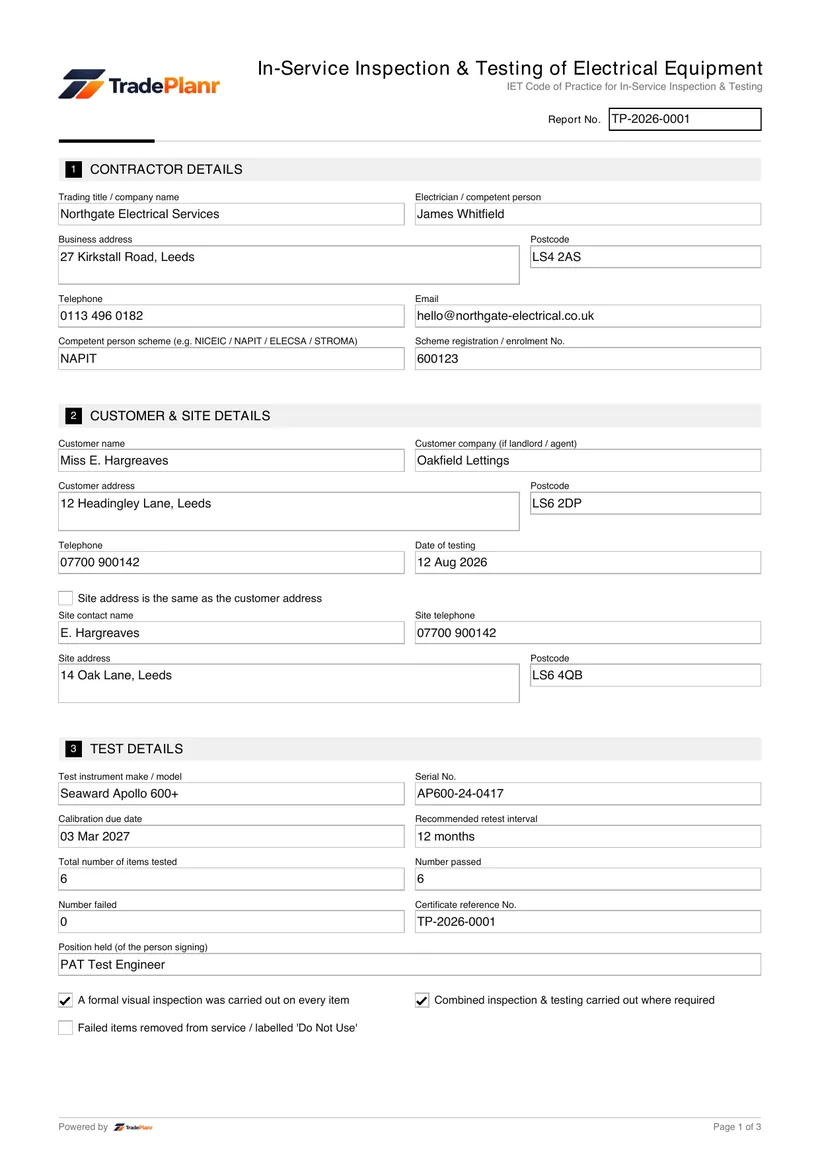
PAT testing, more properly the in-service inspection and testing of electrical equipment, checks that portable and movable appliances are safe to use. It is carried out in line with the IET Code of Practice for the In-service Inspection and Testing of Electrical Equipment.

TradePlanr lets you log each item as you test it, record a pass or fail result, and build up an asset register on your phone. Every appliance gets its details, result and retest date in one place.

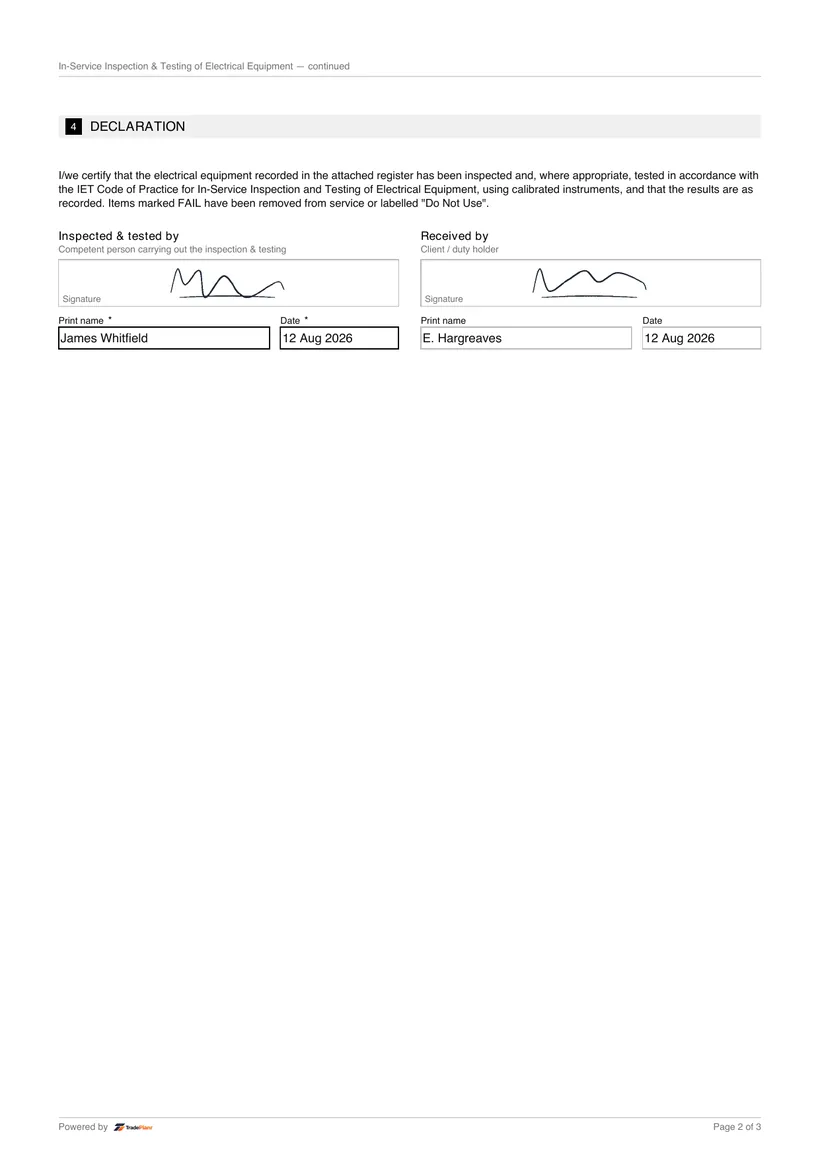
When you have finished the round of testing you produce a PDF certificate and asset register to give to the client, so they have clear evidence of the equipment that was tested and when it is next due.

Issue this certificate from your phone

TradePlanr generates this and 35+ other gas, electrical, oil, plumbing and renewables certificates as proper PDFs — filled on site, signed on screen and stored against the job. Works even with no signal. Free to download.

Download on the App StoreGet it on Google Play

What it covers

  • Client and site where the equipment was tested
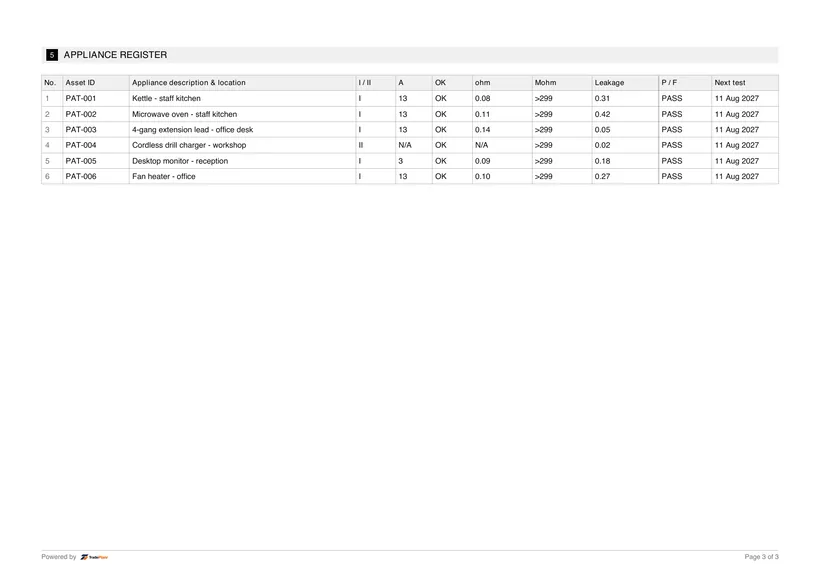
  • Asset register listing each appliance with an ID or description
  • Combined visual inspection and electrical test results for each item
  • A clear pass or fail result against the IET Code of Practice
  • Recommended retest interval and next test date for each item
  • Details of any items failed, removed from use or repaired
  • Name of the tester and the date of testing

When it's required

There is no single law that names PAT testing by that term, but employers and landlords have duties under health and safety law to keep electrical equipment maintained so that it is safe. In-service inspection and testing is a recognised way of meeting those duties.

How often equipment is tested depends on the type of appliance and the environment it is used in, following the risk-based intervals in the IET Code of Practice. High-risk environments and portable tools are typically tested more frequently than low-risk office equipment.

The result is an asset register and certificate that gives the client a record of what was tested, the outcome, and when the next test is due.

How to issue it in TradePlanr

  1. 1

    Set up the site and asset register

    Add the client and site, then start building the asset register by giving each appliance an ID or description.

  2. 2

    Inspect and test each item

    For every appliance, record the visual inspection and electrical test results directly against its entry in the register.

  3. 3

    Record pass or fail and retest date

    Mark each item as a pass or fail to the IET Code of Practice and set the recommended retest interval and next test date.

  4. 4

    Issue the certificate and register

    Sign off the round of testing and generate a PDF certificate with the full asset register to send to the client.

Frequently asked questions

Is PAT testing a legal requirement?

There is no law that requires PAT testing by name, but employers and landlords must keep electrical equipment safe under health and safety law. In-service inspection and testing to the IET Code of Practice is a common way to meet that duty.

How often should equipment be PAT tested?

It depends on the appliance and how it is used. The IET Code of Practice sets risk-based intervals, with portable tools and equipment in harsh environments tested more often than low-risk office items.

What is an asset register in PAT testing?

An asset register is the list of every appliance tested, each with an ID or description, its result and its next test date. TradePlanr builds the register as you test and includes it with the certificate.

Can I do PAT testing records on my phone?

Yes. TradePlanr lets you log each appliance, record pass or fail results, set retest intervals and produce the PDF certificate and asset register on your phone.

No card required · Free to start · iPhone, Android & web