

BS 5266-1

Emergency Lighting Certificate (BS 5266)

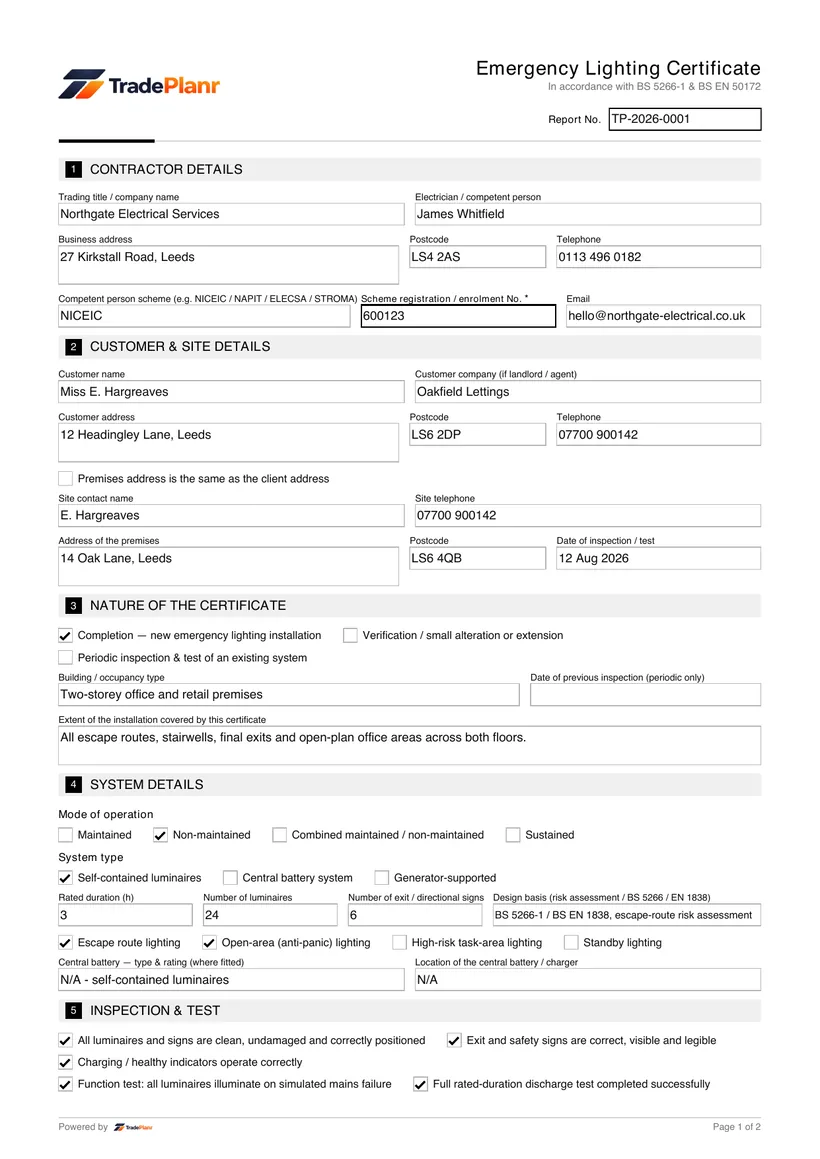
BS 5266 covers emergency lighting in buildings, and the associated certificates record that a system has been installed and commissioned correctly and continues to be tested and maintained. This includes installation and commissioning certificates as well as records of periodic testing.

Emergency lighting needs routine testing to remain effective. Typically this involves a monthly function test to confirm the luminaires operate, and an annual duration test to confirm they run for their full rated duration, with the results documented each time.

TradePlanr lets you complete the relevant BS 5266 certificate on site, log your function and duration test results, note any defects and produce a PDF for the responsible person and your records.

Issue this certificate from your phone

TradePlanr generates this and 35+ other gas, electrical, oil, plumbing and renewables certificates as proper PDFs — filled on site, signed on screen and stored against the job. Works even with no signal. Free to download.

Download on the App StoreGet it on Google Play

What it covers

  • The premises address and responsible person or client details
  • System and luminaire details, including locations and types
  • Whether this is an installation, commissioning or periodic test record
  • Monthly function test results confirming the luminaires operate
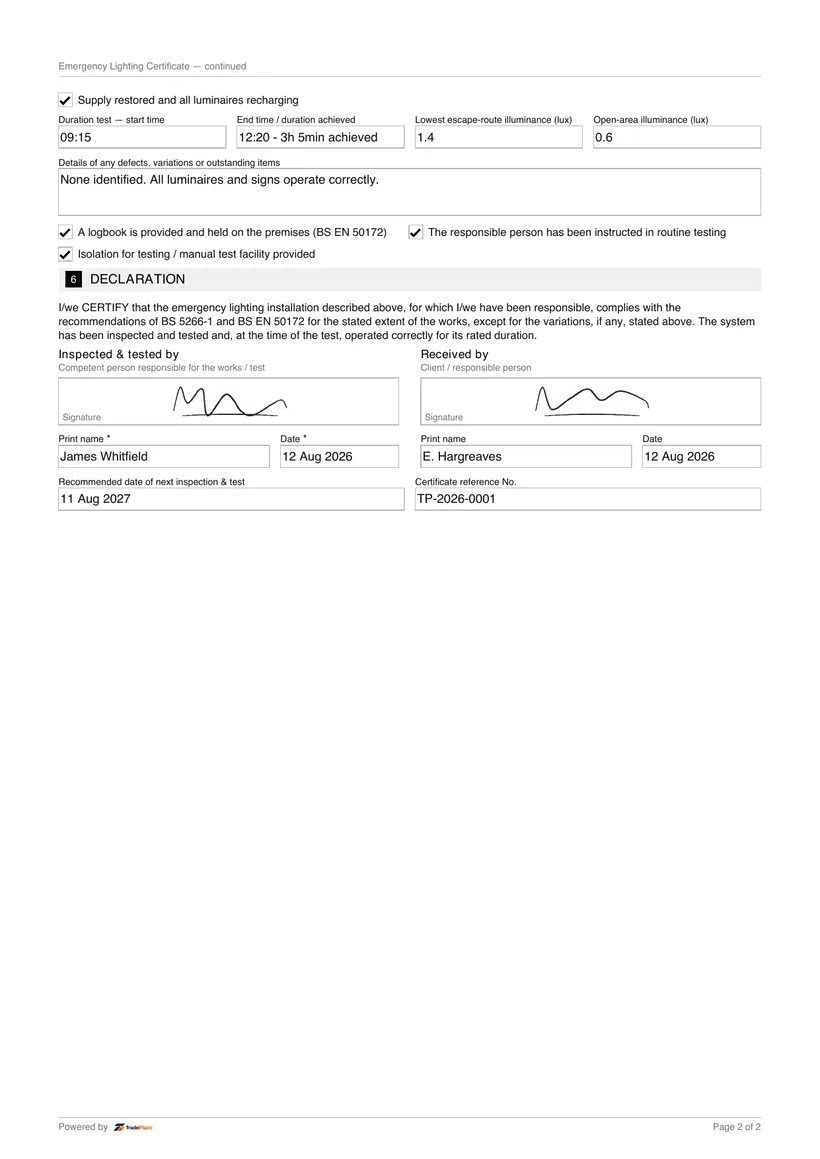
  • Annual duration test results confirming full rated duration
  • Any defects found and remedial actions required
  • Date, declaration and signature confirming the work meets BS 5266

When it's required

Emergency lighting certificates are completed when a system is installed and commissioned, and then at each periodic test. The installation and commissioning certificate confirms the system was set up correctly, while the test records demonstrate ongoing maintenance.

The responsible person for a building generally needs to keep records of emergency lighting testing to show the system is being maintained. A monthly function test and an annual duration test are the typical routine checks, and both should be recorded.

Keeping the certificates and test logs on file makes it straightforward to evidence compliance during fire risk assessments, insurance reviews and inspections, and to track any defects through to completion.

How to issue it in TradePlanr

  1. 1

    Enter premises and luminaire details

    Record the property address, responsible person, and the emergency lighting system and luminaire details, including locations and types.

  2. 2

    Log function and duration test results

    Capture the monthly function test results and, where applicable, the annual duration test results confirming the luminaires run for their full rated duration.

  3. 3

    Record defects and actions

    Note any defects found and the remedial actions required so nothing is missed at the next visit.

  4. 4

    Sign and store the PDF

    Add your declaration and signature, then generate a branded PDF for the responsible person and keep a copy on file.

Frequently asked questions

How often must emergency lighting be tested?

BS 5266 typically involves a monthly function test to confirm the luminaires operate and an annual duration test to confirm they run for their full rated duration. The results should be recorded each time.

What is a duration test?

A duration test confirms the emergency lighting runs for its full rated duration on battery, usually as an annual check, so the system will perform in a real mains failure.

Who is responsible for emergency lighting testing?

The responsible person for the building is generally responsible for ensuring emergency lighting is tested and maintained, and for keeping the test records on file.

Can I record function and duration tests on site?

Yes. TradePlanr lets you log function and duration test results, note defects and generate a PDF certificate on your phone or tablet at the property.

No card required · Free to start · iPhone, Android & web