

BS 5839-6

Domestic Smoke & Heat Alarm Certificate (BS 5839-6)

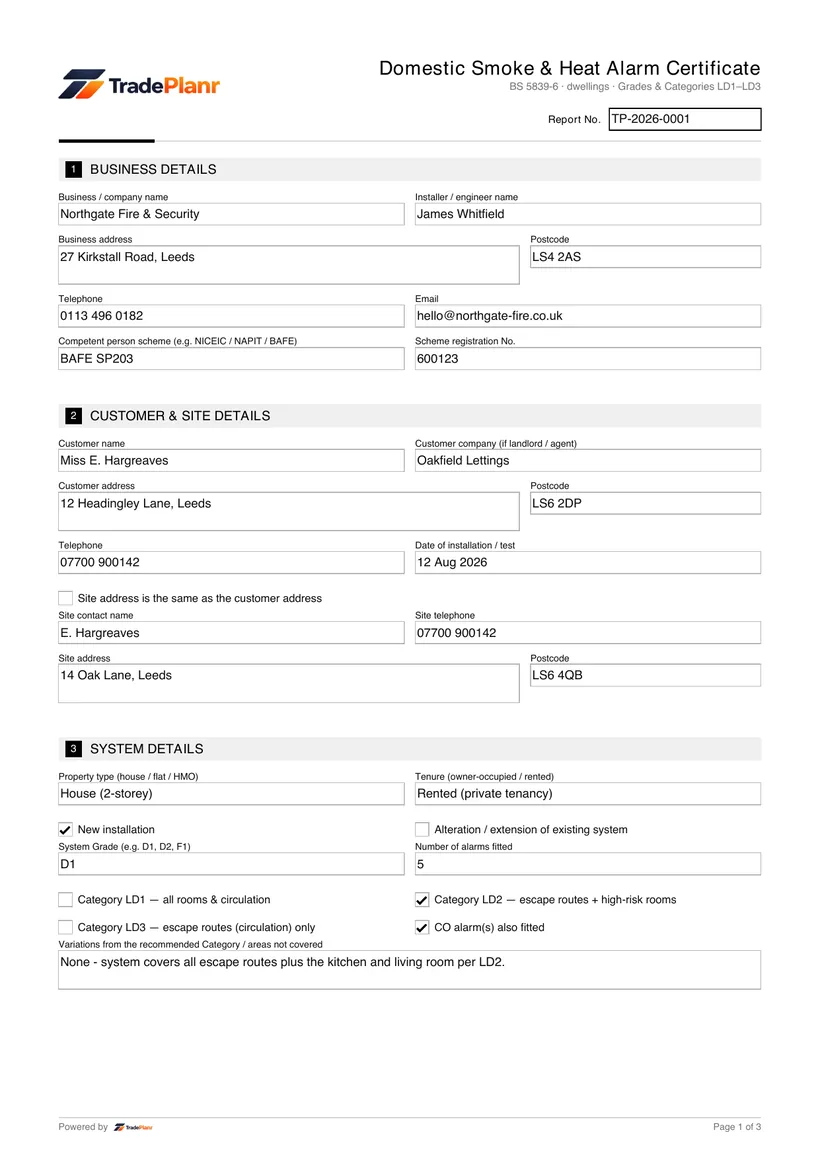
BS 5839-6 is the standard for fire detection and fire alarm systems in dwellings — houses, flats, HMOs and rented homes. When you install or upgrade smoke and heat alarms, a certificate records what was fitted, to what Grade and Category, and that the system was tested and working when you left.

Free plan · No card required · Works offline on site

The certificate records the system Grade (from mains-powered interlinked systems with battery back-up down to standalone battery alarms) and the Category — LD1, LD2 or LD3 — which defines how much of the dwelling is covered. Landlords, letting agents, building control and housing associations increasingly expect this paperwork.

TradePlanr lets you complete a domestic smoke and heat alarm certificate on your phone at the property, log each alarm's location and type, capture test results and the customer's signature, and hand over a clean branded PDF before you drive off.

What it covers

  • The dwelling address, client or landlord details and the installer completing the certificate
  • The system Grade fitted, for example mains-powered interlinked alarms with battery back-up
  • The Category of coverage: LD1, LD2 or LD3
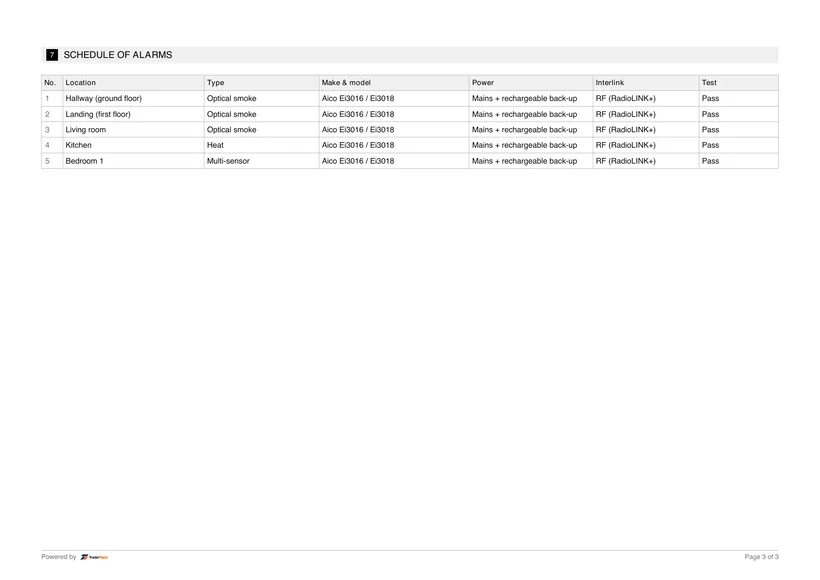
  • Each alarm's location, type (smoke, heat or combined) and how it is interlinked
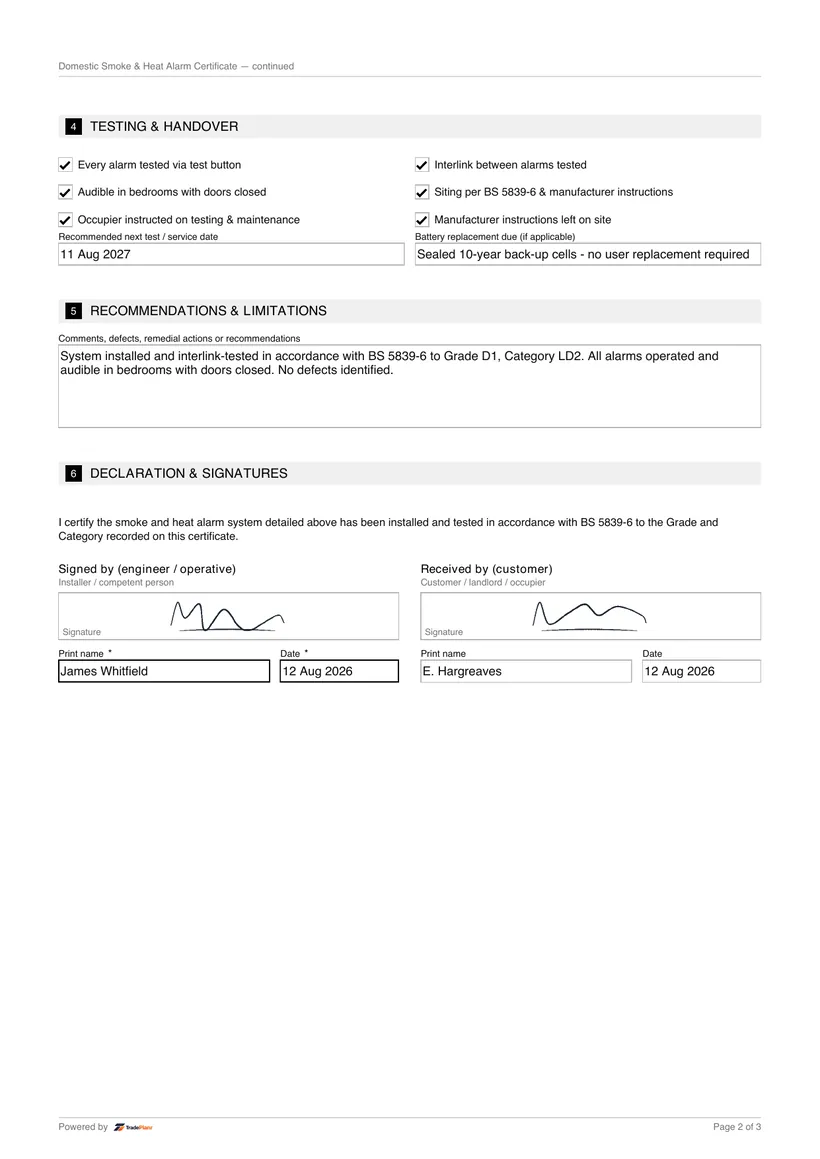
  • Test results: alarm operation, interlink test and audibility
  • Any recommendations, limitations or areas not covered
  • Date, declaration and signatures confirming the installation meets BS 5839-6

When it's required

A BS 5839-6 certificate is completed when smoke and heat alarms are installed, extended or replaced in a dwelling. Building Regulations require fire detection in new builds and material alterations, and the certificate is your evidence the system meets the standard.

Landlords in England, Wales and Scotland must ensure working smoke alarms (and heat or carbon monoxide alarms where applicable) in rented homes, and letting agents commonly ask for certification. HMO licensing typically requires a higher Category of coverage, often with certification at inspection.

Recording the Grade and Category matters because it defines the level of protection the household is relying on. Keeping the certificate on file protects the installer and gives the landlord or homeowner evidence for insurers, licensing and future sales.

How to issue it in TradePlanr

  1. 1

    Enter dwelling and client details

    Record the property address, the client or landlord, and your company details on the certificate.

  2. 2

    Record the Grade and Category

    Set the system Grade fitted and the Category of coverage — LD1, LD2 or LD3 — so the level of protection is documented.

  3. 3

    Log each alarm and your tests

    List every smoke, heat or combined alarm with its location and interlink method, then record your operation, interlink and audibility test results.

  4. 4

    Sign and hand over the PDF

    Add your declaration, capture the customer's signature and generate a branded PDF for the landlord or homeowner, with a copy stored against the job.

Issue this certificate from your phone or the web

TradePlanr generates this and 35+ other gas, electrical, oil, plumbing and renewables certificates as proper PDFs — filled on site, signed on screen and stored against the job. Works even with no signal. Free to start.

Frequently asked questions

What are LD1, LD2 and LD3?

They are the coverage Categories in BS 5839-6. LD1 covers all circulation spaces and all rooms where a fire might start, LD2 covers circulation spaces plus specified high-risk rooms such as kitchens and living rooms, and LD3 covers circulation spaces (escape routes) only. Higher-risk dwellings such as HMOs typically need LD1 or LD2.

What do the Grades mean in BS 5839-6?

The Grade describes the type of system fitted, ranging from full fire alarm systems with control equipment down to standalone alarms. In most homes the common Grades are mains-powered interlinked alarms with battery back-up, or tamper-proof long-life battery alarms — the certificate records which was installed.

Do landlords need a smoke alarm certificate?

Landlords must ensure working smoke alarms in rented homes, and while a certificate is not always a strict legal requirement, letting agents, HMO licensing and insurers commonly ask for evidence. A BS 5839-6 certificate is the standard way to document the installation and tests.

Who can issue a BS 5839-6 certificate?

A competent installer takes responsibility for the work meeting BS 5839-6 — commonly an electrician or fire alarm engineer. The certificate is their declaration that the system Grade and Category are appropriate and the alarms were tested and working.

Is this different from a BS 5839-1 fire alarm certificate?

Yes. BS 5839-1 covers fire detection and alarm systems in non-domestic premises such as commercial buildings, with design, installation, commissioning and acceptance certificates. BS 5839-6 is the dwellings standard, and this certificate covers domestic smoke and heat alarm systems.

Start Now — It's Free

Free to start · No card · No download needed — works in your browser

Download on the App StoreGet it on Google Play