

ACOP L8 / HSG274

Legionella Risk Assessment (ACOP L8 / HSG274)

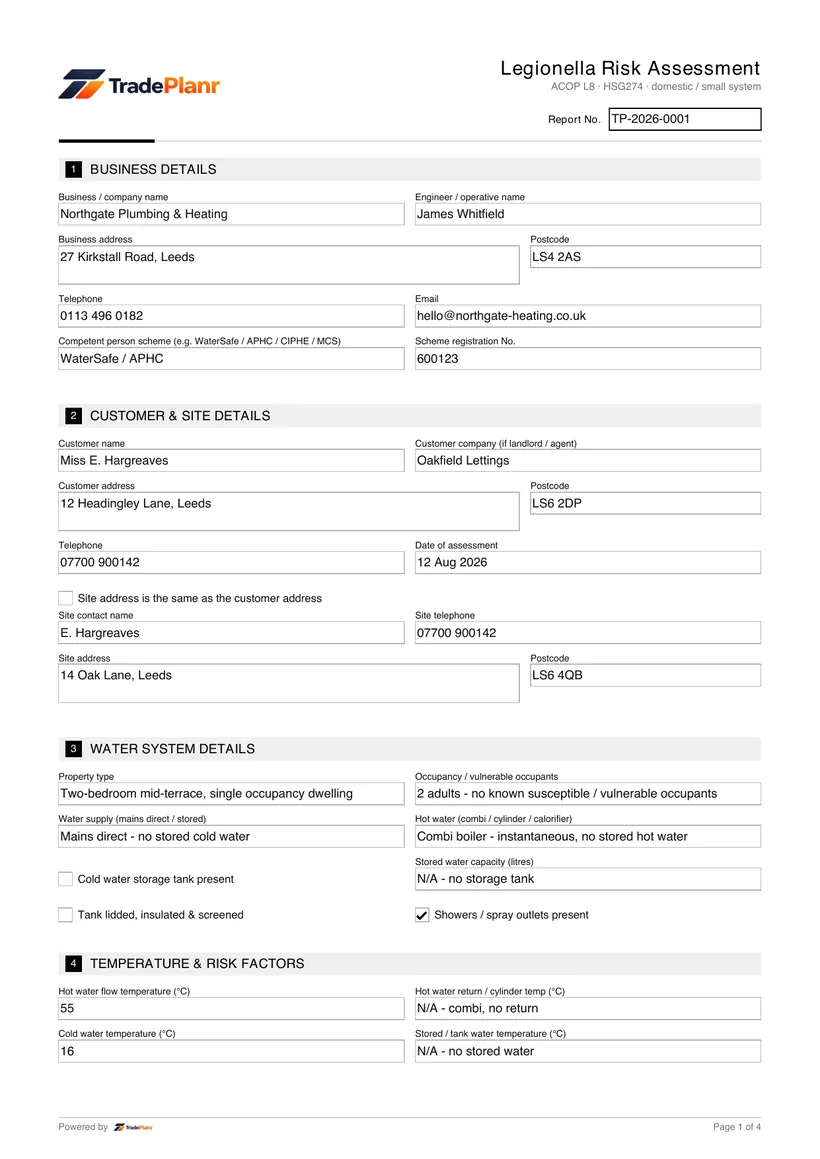
A Legionella risk assessment reviews a water system to identify where Legionella bacteria could grow and how they could be spread, then sets out the controls needed to manage that risk. It follows the guidance in the Approved Code of Practice L8 and the technical guidance HSG274.

Landlords, employers and those in control of premises have a legal duty to assess and control the risk of exposure to Legionella. For many domestic rental properties a straightforward assessment is enough, while larger or more complex systems need a fuller review.

TradePlanr lets you record the system details, risk locations, temperatures and control measures on site and produce a clear PDF risk assessment, so the duty to assess is documented properly.

Issue this certificate from your phone

TradePlanr generates this and 35+ other gas, electrical, oil, plumbing and renewables certificates as proper PDFs — filled on site, signed on screen and stored against the job. Works even with no signal. Free to download.

Download on the App StoreGet it on Google Play

What it covers

  • Property and responsible person or duty holder details
  • Water system description, including tanks, cylinders and outlets
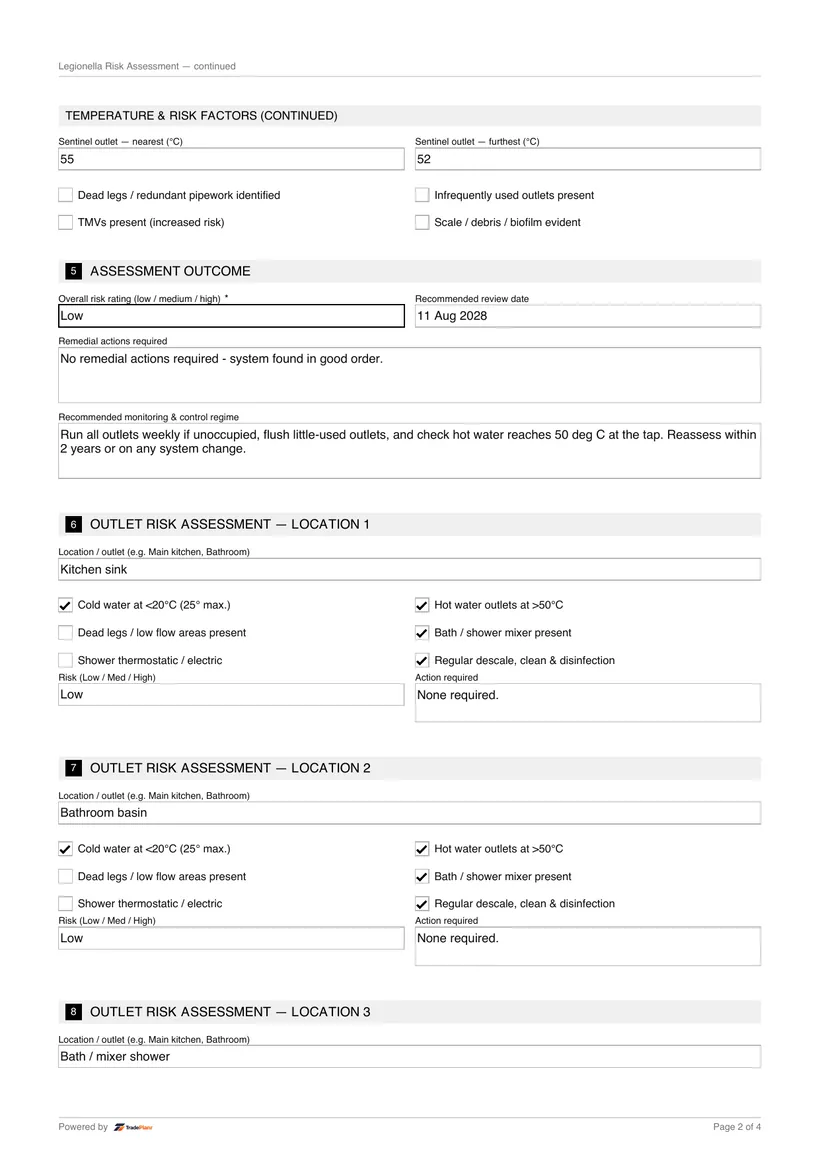
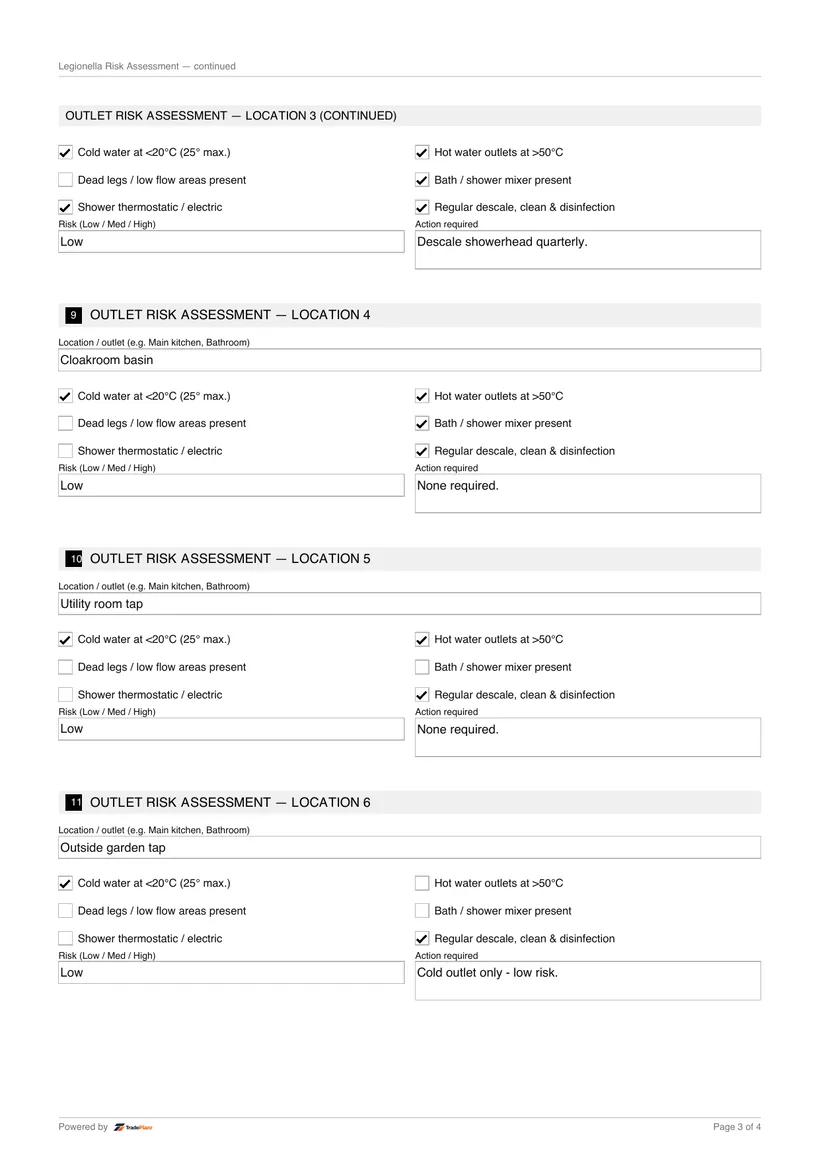
  • Risk locations such as dead legs, infrequently used outlets and stored water
  • Hot and cold water temperatures recorded at key points
  • Assessment of who could be exposed and how
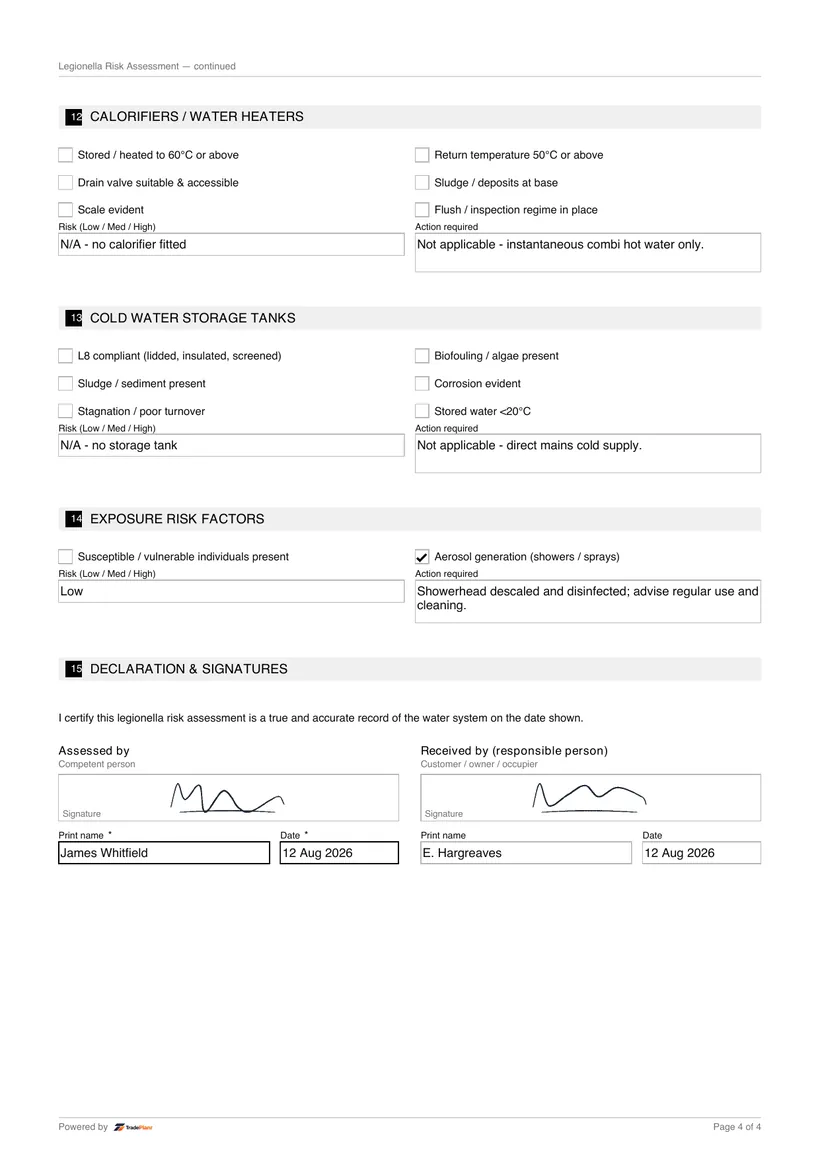
  • Recommended control measures and any actions required
  • Assessor details, assessment date and review date

When it's required

Anyone in control of premises, including landlords and employers, has a duty under health and safety law to assess and manage the risk of Legionella in their water systems. The ACOP L8 and HSG274 guidance explain how to meet that duty.

A risk assessment is needed before controls can be put in place, and it should be reviewed regularly and whenever the system or its use changes. For simple domestic systems the assessment can be concise, but the duty to assess still applies.

The completed assessment is kept as evidence that the risk has been considered and managed, and may be requested by tenants, letting agents, insurers or an enforcing authority.

How to issue it in TradePlanr

  1. 1

    Enter the system and site details

    Record the property, the duty holder and a description of the water system, including tanks, cylinders and the outlets served.

  2. 2

    Identify risk locations and temperatures

    Log risk locations such as dead legs and infrequently used outlets, and record hot and cold water temperatures at the key points you check.

  3. 3

    Record control measures and actions

    Set out the control measures needed and any remedial actions, along with who could be exposed, so the assessment gives a clear plan.

  4. 4

    Sign and store the PDF

    Capture the signature, set a review date, generate the PDF risk assessment and store it against the property for the record.

Frequently asked questions

Who needs a Legionella risk assessment?

Anyone in control of premises, including landlords and employers, has a duty to assess and control the risk of Legionella in their water systems. This covers most rented properties and workplaces with water systems.

What are ACOP L8 and HSG274?

ACOP L8 is the Approved Code of Practice for controlling Legionella bacteria in water systems, and HSG274 is the supporting technical guidance. Together they explain how to assess and manage the risk.

How often should the assessment be reviewed?

A risk assessment should be reviewed regularly and whenever the water system or the way it is used changes, or if there is reason to think it is no longer valid. TradePlanr lets you set a review date on the record.

Can I complete the assessment on site?

Yes. TradePlanr lets you record the system details, risk locations, temperatures and controls, capture the signature and produce the PDF at the property.

No card required · Free to start · iPhone, Android & web