

What is the difference between TMV2 and TMV3?
TMV2 covers domestic and general applications, while TMV3 applies to higher-risk healthcare settings such as hospitals and care homes, where stricter performance and testing requirements apply.
Fill it in on site, sign on screen, and send a professional TMV PDF before you leave the job.
Free to build · Send it with a 7-day free trial
Need a TMV for your own property? It's issued by the tradesperson who does the work — TradePlanr is the app they use.
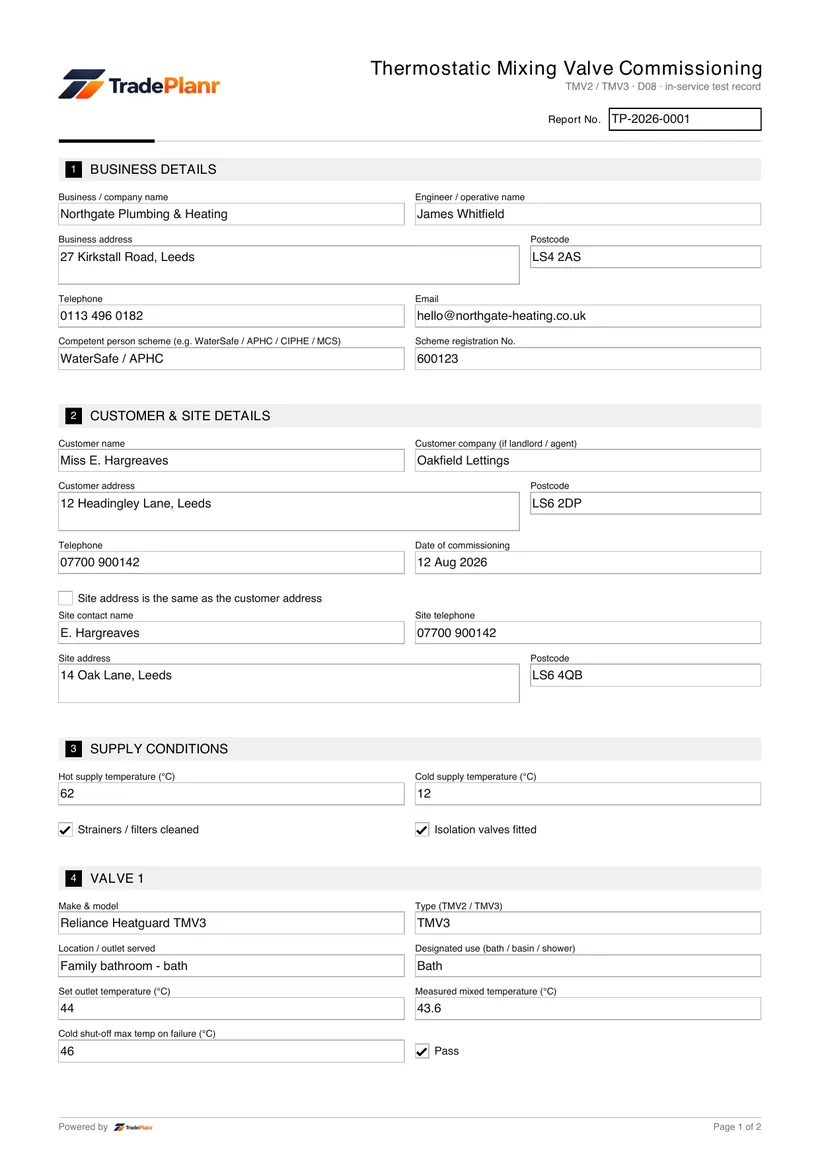
A thermostatic mixing valve commissioning certificate records that a TMV has been installed, set and tested to deliver water at a safe blended temperature. TMVs are used to prevent scalding at outlets such as baths, basins and showers.
The TMV2 scheme covers domestic settings while the TMV3 scheme applies to higher-risk healthcare environments such as hospitals and care homes. Both require the valve to be commissioned and periodically checked to confirm it still delivers a safe temperature and fails safe.
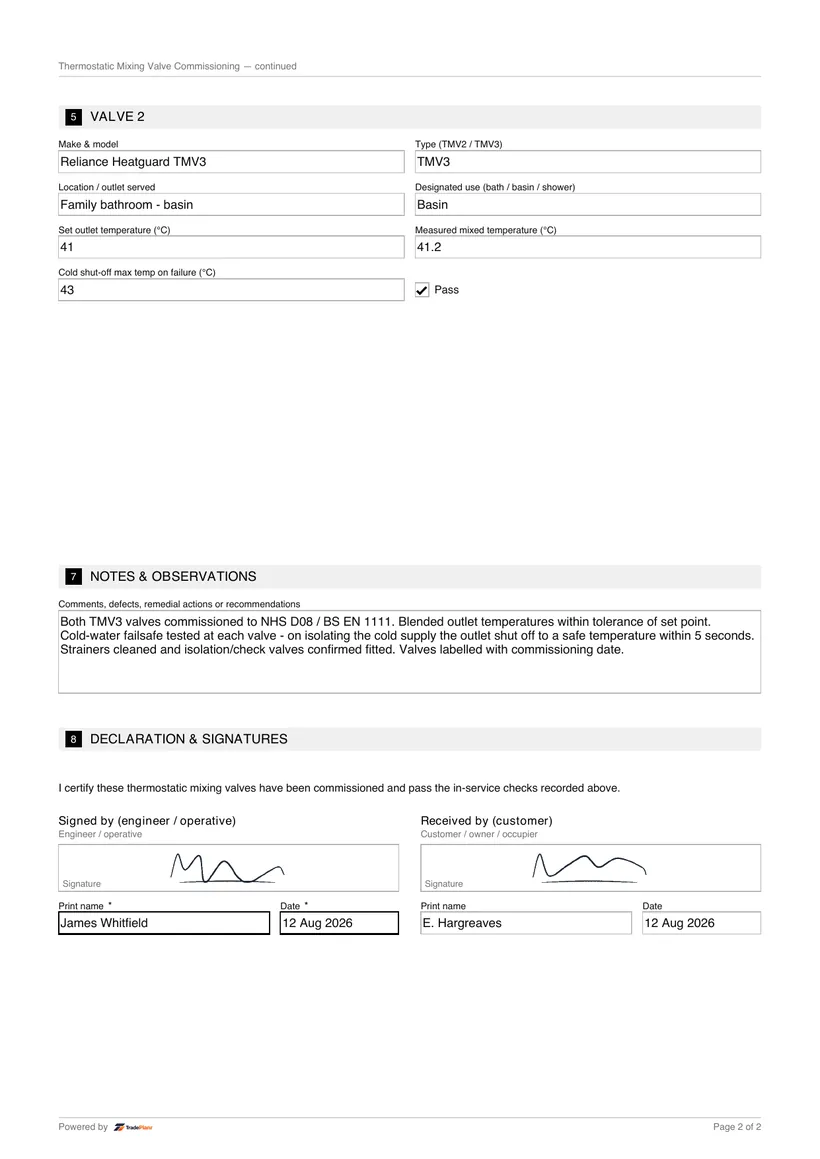
TradePlanr lets you record the blended temperature, fail-safe test and valve details on site and produce a PDF commissioning certificate, so scald-prevention checks are documented cleanly.
A TMV commissioning certificate is completed when a thermostatic mixing valve is installed to control the temperature at an outlet and prevent scalding. In healthcare settings, TMV3 valves and stricter checks apply.
TMVs also need periodic checks after installation, because performance can drift over time. A common approach is an initial check within the first few weeks and then routine servicing to confirm the temperature and fail-safe operation.
The certificate provides evidence of safe commissioning, which is important for landlords, care providers and healthcare estates managing scald risk to vulnerable users.
Record the outlet location, the TMV make and model and whether it is a TMV2 or TMV3 application, so the certificate matches the installed valve.
Log the hot and cold supply temperatures and the set blended outlet temperature, checking it against the required value for the application.
Carry out the cold supply fail-safe test and record the result, confirming the valve shuts off hot water if the cold supply fails.
Capture the signature, generate the PDF commissioning certificate and store it against the job, ready to hand over or add to a maintenance record.
TradePlanr generates this and 79 other gas, electrical, oil, plumbing and renewables certificates as proper PDFs — filled on site, signed on screen and stored against the job. Works even with no signal. Free to start.
TMV2 covers domestic and general applications, while TMV3 applies to higher-risk healthcare settings such as hospitals and care homes, where stricter performance and testing requirements apply.
A common approach is an initial check within the first few weeks of installation, followed by routine servicing at regular intervals to confirm the blended temperature and fail-safe operation. Healthcare settings often follow a defined maintenance schedule.
Commissioning confirms the valve delivers water at a safe blended temperature and fails safe if the cold supply is lost, which is essential to prevent scalding at the outlet.
Yes. TradePlanr lets you record the temperatures and fail-safe test, capture the signature and produce the PDF at the property.
The commissioning record for an unvented hot water storage system under Part G3.
The Legionella risk assessment for domestic and commercial water systems to ACOP L8 / HSG274.
The HHIC Benchmark commissioning checklist for hot water storage cylinders.
TradePlanr Agency builds custom-coded, SEO-optimised websites and runs Google Ads for UK trades — from £375, by the team behind TradePlanr.
Explore TradePlanr Agency