

How often should kitchen extract ductwork be cleaned?
TR19 Grease bases the interval on usage: typically every three months for heavy use, six months for moderate use and twelve months for light use, adjusted by the deposit readings found.
Fill it in on site, sign on screen, and send a professional TR19 PDF before you leave the job.
Free to build · Send it with a 7-day free trial
Need a TR19 for your own property? It's issued by the tradesperson who does the work — TradePlanr is the app they use.
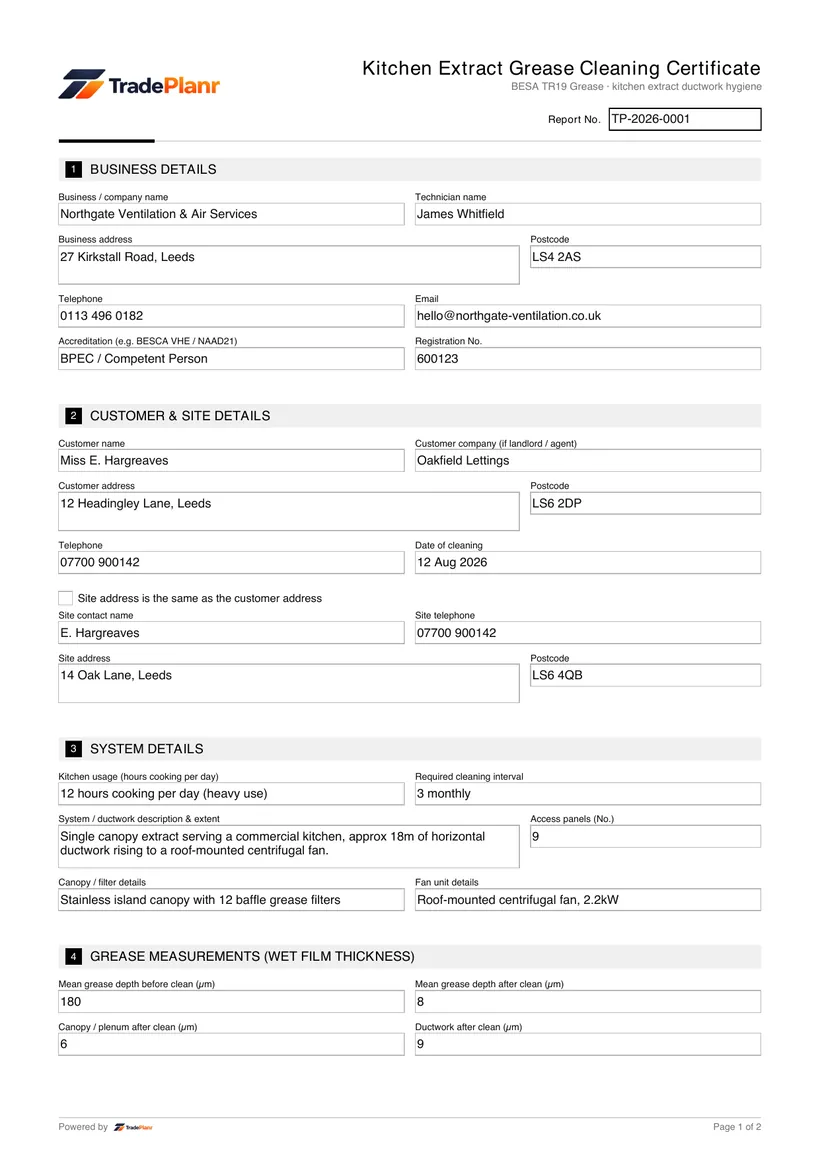
A TR19 grease cleaning certificate records the cleaning of kitchen extract ductwork to the BESA TR19 Grease specification, confirming grease deposits have been reduced to acceptable levels and the system's fire risk is being managed.
Grease build-up in extract ductwork is a leading cause of commercial kitchen fires, and insurers routinely require cleaning to TR19 Grease at intervals based on usage: typically every three months for heavy use, six months for moderate use and twelve months for light use.
TradePlanr lets you record the system, the deposit thickness readings before and after, and any access limitations on site, then produce a clear PDF certificate for the client and their insurer.
Kitchen extract systems serving commercial cooking need cleaning to TR19 Grease at intervals driven by how heavily the kitchen is used, with heavy-use systems typically cleaned every three months.
The responsible person's fire risk assessment and most property insurance policies rely on the cleaning being done and documented; an uncleaned extract system can invalidate cover after a fire.
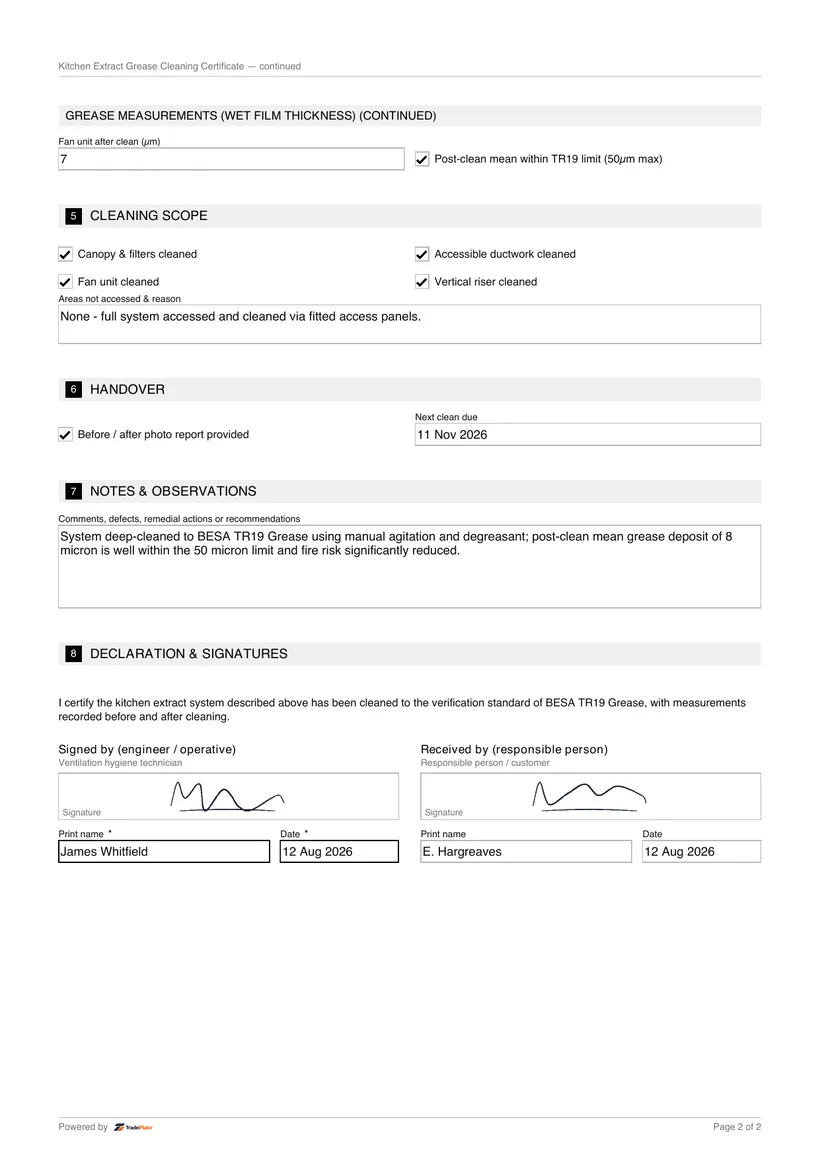
The certificate, with before and after deposit readings and any access limitations, is the evidence the clean met the specification and tells the client when the next clean is due.
Record the client, the kitchen and the extract system, including the canopy, duct runs and fan, and how heavily the kitchen is used.
Log the grease deposit thickness measurements at the test points before and after the clean, showing the system has been brought within acceptable limits.
Note the areas cleaned and the method, any sections that could not be accessed with recommendations, and the access panels fitted or needed.
Capture the signature, set the next clean date, generate the PDF certificate and store it against the site, ready to send to the client and their insurer.
This work comes due again as often as every 3 months, depending on use. When it does, TradePlanr texts your customer from your business name with a link to book you in — so the repeat job comes back to you, not whoever they find on Google.
TradePlanr generates this and 79 other gas, electrical, oil, plumbing and renewables certificates as proper PDFs — filled on site, signed on screen and stored against the job. Works even with no signal. Free to start.
TR19 Grease bases the interval on usage: typically every three months for heavy use, six months for moderate use and twelve months for light use, adjusted by the deposit readings found.
Grease deposits in extract ductwork are a major fire risk, so insurers commonly make cleaning to TR19 Grease a condition of cover and expect certificates with deposit readings as evidence.
The certificate records any sections not cleaned, why, and what access panels are needed, so the client can address the limitation before the next clean.
Yes. TradePlanr lets you record the system, readings and clean, capture the signature and produce the PDF before you leave site.
The commissioning record for mechanical ventilation systems under Building Regs Part F.
The commercial catering gas safety record (CP42) for kitchens and catering appliances.
The commercial gas installation safety record (CP1) for non-domestic appliances.
TradePlanr Agency builds custom-coded, SEO-optimised websites and runs Google Ads for UK trades — from £375, by the team behind TradePlanr.
Explore TradePlanr Agency