

Smoke & CO Alarm Regs 2022 / BS EN 50291

Carbon Monoxide Alarm Certificate

Fill it in on site, sign on screen, and send a professional CO Alarm PDF before you leave the job.

Free to build · Send it with a 7-day free trial

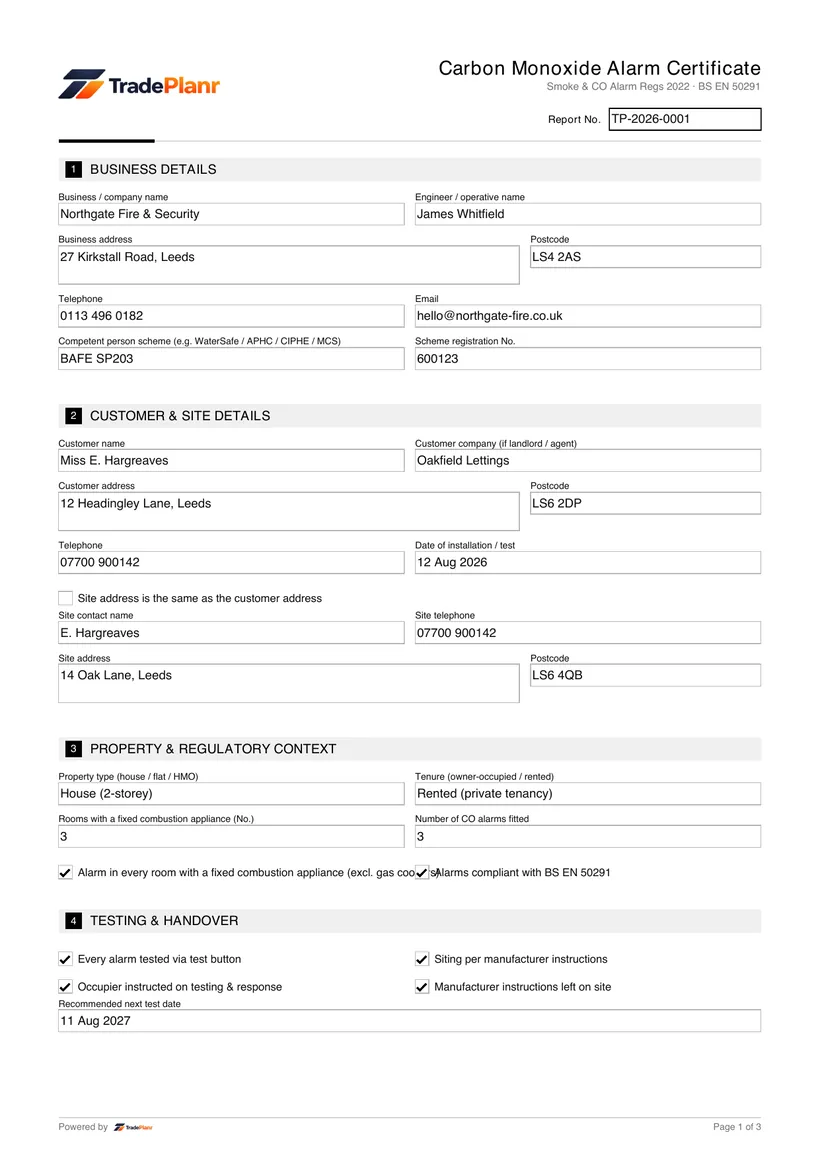
A carbon monoxide alarm certificate records the CO alarms fitted or checked at a property: where each one is, its make and model, how it is powered and that it was tested and working. It documents compliance with the Smoke and Carbon Monoxide Alarm (Amendment) Regulations 2022 and confirms the alarms themselves meet BS EN 50291.

Since 1 October 2022, landlords in England must provide a carbon monoxide alarm in any room used as living accommodation that contains a fixed combustion appliance, excluding gas cookers, and repair or replace alarms reported faulty. Building Regulations also require CO alarms with new solid fuel appliance installations, so installers and letting agents both need this paperwork.

TradePlanr lets you complete the certificate on your phone at the property: log the rooms with combustion appliances, record each alarm with its replace-by date, capture the test results and a signature, then hand over a clean branded PDF before you leave.

What it covers

  • The property address, client or landlord details and the person completing the certificate
  • The tenure and regulatory context, including whether the property is rented
  • The rooms containing fixed combustion appliances and whether each has a CO alarm
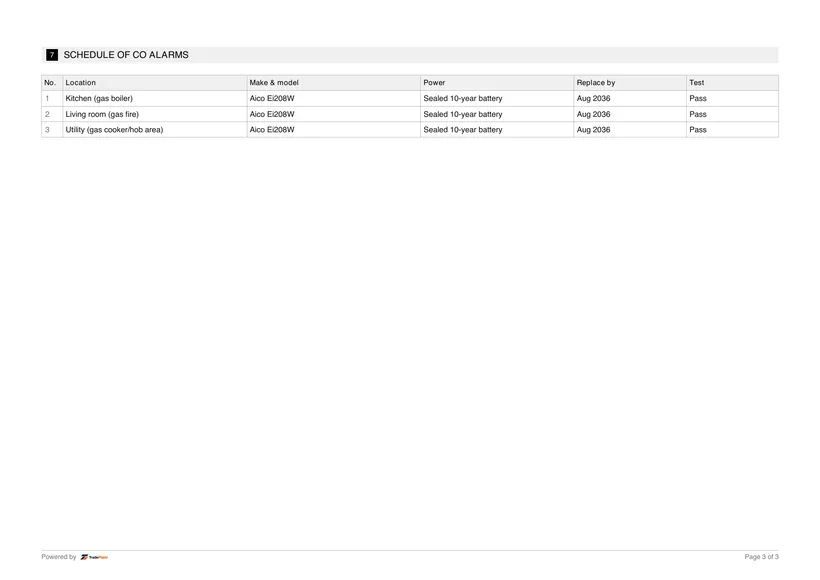
  • An alarm-by-alarm schedule: location, make and model, power source and replace-by date
  • Confirmation each alarm complies with BS EN 50291 and is sited correctly
  • Test results confirming every alarm operated when tested
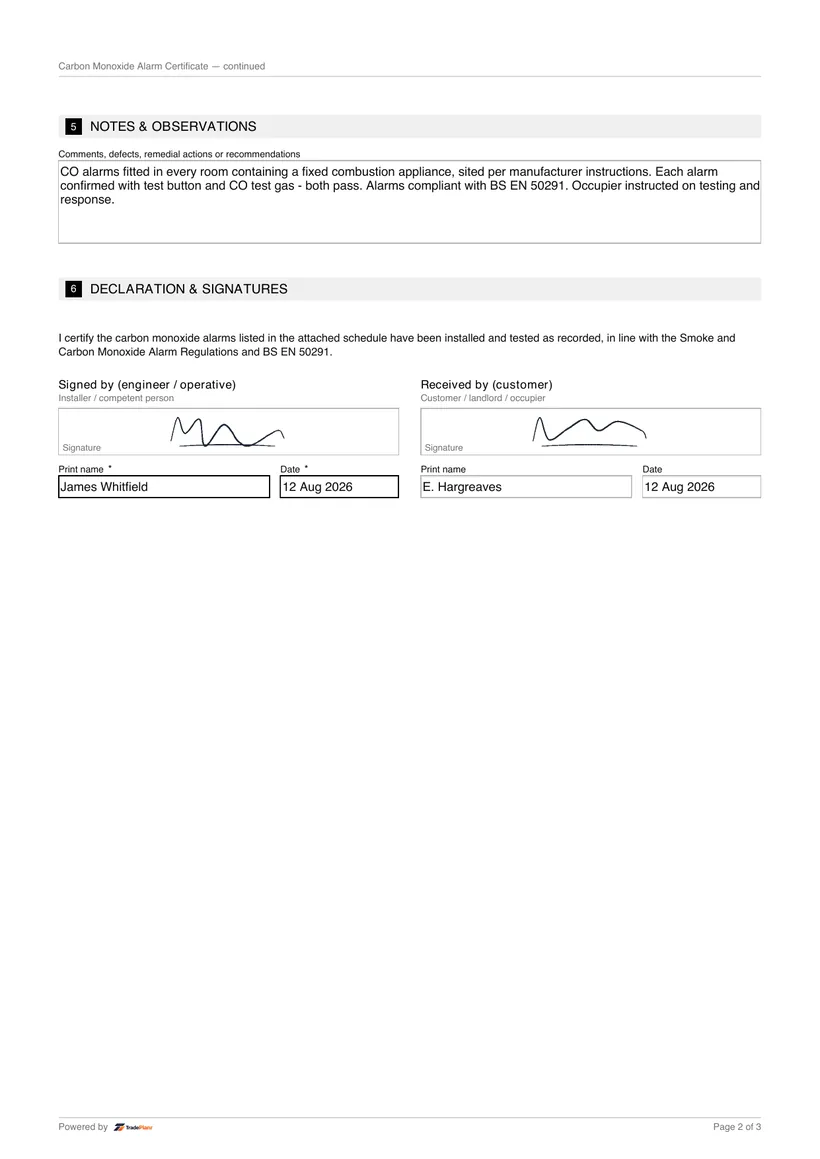
  • Handover confirmation, date and signatures

When it's required

Since 1 October 2022, landlords in England must provide a carbon monoxide alarm in any room used as living accommodation with a fixed combustion appliance, excluding gas cookers, under the Smoke and Carbon Monoxide Alarm (Amendment) Regulations 2022.

Building Regulations Approved Document J requires a CO alarm to be fitted when a new or replacement solid fuel appliance such as a stove or open fire is installed.

Letting agents, licensing schemes and insurers commonly ask for evidence that alarms are present and working, and a certificate at check-in, alarm installation or a gas or solid fuel service visit provides it.

How to issue it in TradePlanr

  1. 1

    Enter the property and client details

    Record the address, the landlord or homeowner and your company details, and note the tenure so the regulatory context is clear.

  2. 2

    Survey the rooms with combustion appliances

    List each room used as living accommodation with a fixed combustion appliance and confirm whether a CO alarm is fitted where the regulations require one.

  3. 3

    Log each alarm

    Record every alarm's location, make and model, power source and replace-by date, and confirm it meets BS EN 50291 and is sited correctly.

  4. 4

    Test the alarms

    Press-test each alarm, record the result, and note any alarms that failed or are past their replace-by date so they can be replaced.

  5. 5

    Sign and hand over the PDF

    Capture your signature and the customer's, then generate a branded PDF for the landlord or homeowner and keep a copy against the job.

Issue this certificate from your phone or the web

TradePlanr generates this and 45+ other gas, electrical, oil, plumbing and renewables certificates as proper PDFs — filled on site, signed on screen and stored against the job. Works even with no signal. Free to start.

Frequently asked questions

Where are CO alarms legally required in rented homes?

In England, since 1 October 2022, landlords must provide a carbon monoxide alarm in any room used as living accommodation containing a fixed combustion appliance — boilers, gas fires, stoves and open fires — with gas cookers excluded. Faulty alarms must be repaired or replaced once reported.

Do CO alarms need to meet a standard?

Yes. Alarms for domestic use should comply with BS EN 50291, and most carry a replace-by date of five to ten years. The certificate records the model and replace-by date of each alarm so replacements can be planned.

Is a CO alarm certificate a legal requirement?

The regulations require the alarms rather than a specific certificate, but landlords need evidence of compliance for letting agents, licensing and insurers. A certificate recording each alarm and its test is the practical way to provide it.

When should a CO alarm be fitted with a new appliance?

Building Regulations require a CO alarm when a new or replacement solid fuel appliance is installed, and fitting one is good practice with any new fixed combustion appliance. Recording it on a certificate documents the installation.

Start Now — It's Free

Free to start · No card · No download needed — works in your browser

Download on the App StoreGet it on Google Play