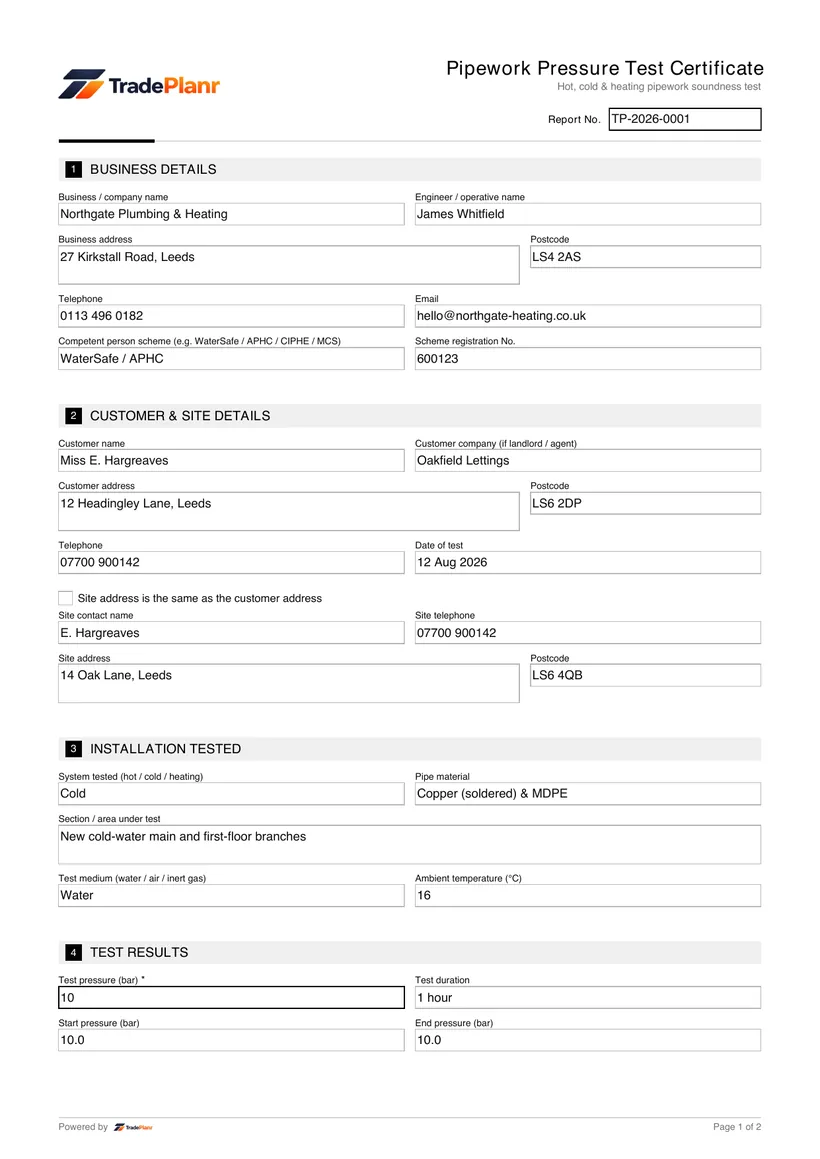
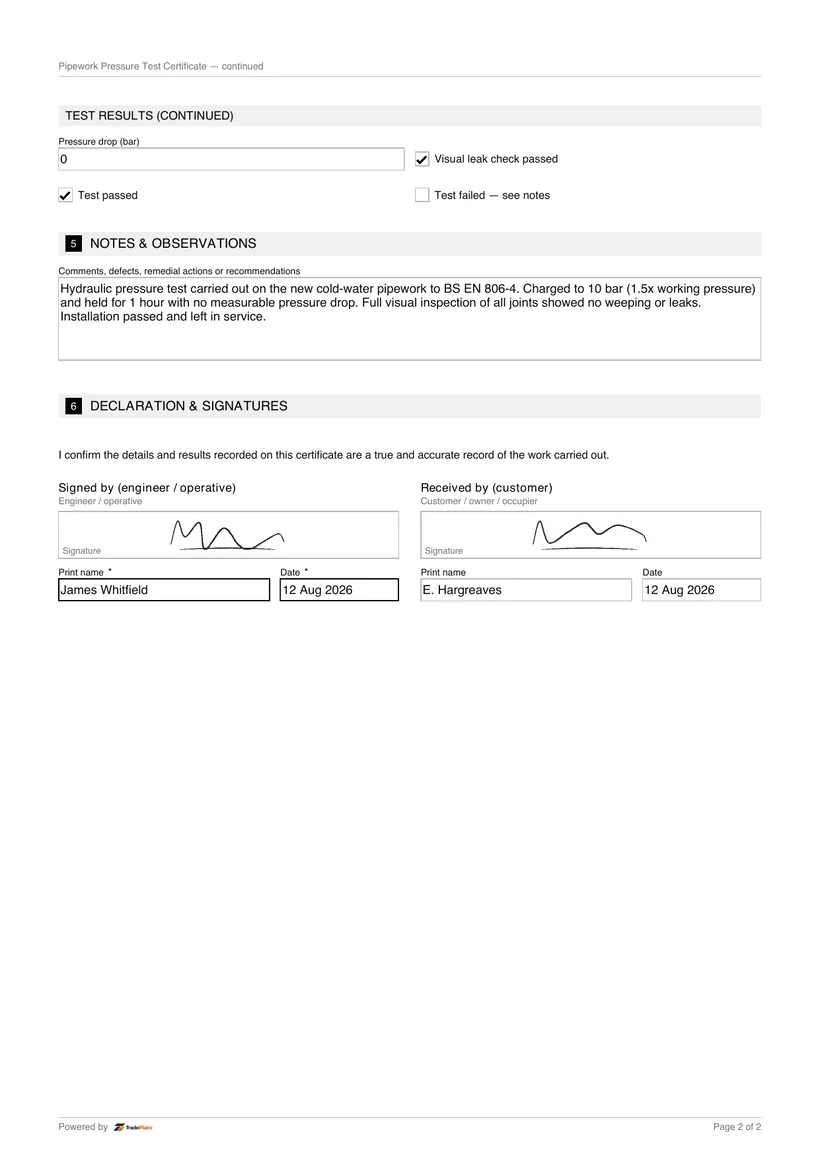


What is a pipework pressure test?
It is a soundness test that applies pressure to new or altered pipework and holds it for a set time to confirm there are no leaks before the system is concealed or brought into use.
Fill it in on site, sign on screen, and send a professional Pressure Test PDF before you leave the job.
Free to build · Send it with a 7-day free trial
Need a Pressure Test for your own property? It's issued by the tradesperson who does the work — TradePlanr is the app they use.
A pipework pressure test certificate records that new or altered water or heating pipework has been tested for soundness before being brought into use. It confirms the pipework held the required test pressure with no unacceptable loss.
Pressure testing of water installations is carried out in line with BS EN 806, which covers the testing and commissioning of pipework inside buildings. A recorded test provides evidence that the pipework is sound before it is concealed or the system is filled and used.
TradePlanr lets you record the test pressure, duration and result on site and produce a PDF certificate, so the soundness test is documented without extra office work.
A pressure test should be carried out whenever new or altered water or heating pipework is installed, ideally before it is concealed within walls, floors or screed. It confirms there are no leaks before the system is finished.
Testing water installations to BS EN 806 is the recognised approach, and the certificate records the pressure applied, the hold time and the result as evidence of a sound installation.
The certificate supports later work, such as underfloor heating commissioning or a boiler installation, and may be requested by the customer, a main contractor or during a property sale.
Record the property, a description of the pipework tested, the material and whether it is a water or heating system.
Log the test medium, the test pressure applied and the duration it was held, in line with the BS EN 806 approach to testing pipework.
Enter any pressure loss observed and the pass or fail result, confirming the pipework is sound before it is concealed or filled.
Capture the signature, generate the PDF pressure test certificate and store it against the job, ready to hand over or pass to the main contractor.
TradePlanr generates this and 79 other gas, electrical, oil, plumbing and renewables certificates as proper PDFs — filled on site, signed on screen and stored against the job. Works even with no signal. Free to start.
It is a soundness test that applies pressure to new or altered pipework and holds it for a set time to confirm there are no leaks before the system is concealed or brought into use.
Testing of water installations inside buildings is carried out in line with BS EN 806, which covers testing and commissioning of the pipework. The certificate references this approach.
Ideally before the pipework is concealed within walls, floors or screed, so any leaks are found and fixed before finishes are applied or the system is filled.
Yes. TradePlanr lets you record the test pressure, duration and result, capture the signature and produce the PDF at the property.
The commissioning record for a wet underfloor heating system, including pressure test and flow rates.
The compliance record for plumbing work under the Water Supply (Water Fittings) Regulations 1999.
The commissioning record for an unvented hot water storage system under Part G3.
TradePlanr Agency builds custom-coded, SEO-optimised websites and runs Google Ads for UK trades — from £375, by the team behind TradePlanr.
Explore TradePlanr Agency