

MCS MIS 3001

Solar Thermal Commissioning Certificate (MCS MIS 3001)

Fill it in on site, sign on screen, and send a professional Solar Thermal PDF before you leave the job.

Free to build · Send it with a 7-day free trial

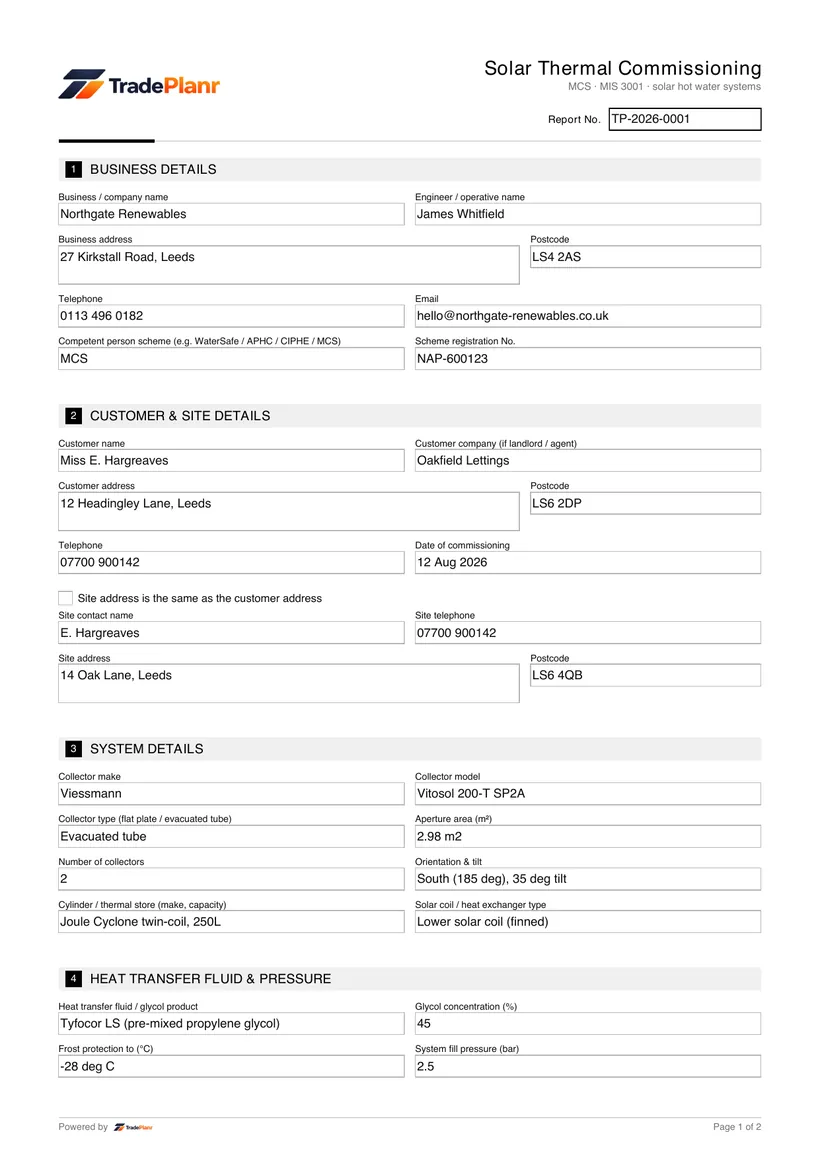
A solar thermal commissioning certificate records that a solar hot water system has been installed, filled and commissioned correctly, in line with the requirements of MCS MIS 3001, the installation standard for solar heating systems. It captures the collector and cylinder details, the heat transfer fluid condition and the checks proving the system is safe and working at handover.

Commissioning matters on solar thermal because the system runs sealed, pressurised and at high temperatures: the glycol concentration, expansion vessel and pressure relief valve all need to be verified, and stagnation and scald protection confirmed. A documented commissioning record supports the MCS certificate, the workmanship warranty and any future service visits.

TradePlanr lets you work through the commissioning checks on your phone or tablet at the cylinder: record the collector and fluid details, log the flow rate and controller setup, confirm the customer has been shown the system and produce a branded PDF to hand over on the day.

What it covers

  • Customer, installation address and installing company details
  • System details: collector make and type (flat plate or evacuated tube), collector area and the cylinder serving the system
  • Heat transfer fluid: glycol concentration, frost protection temperature and system pressure
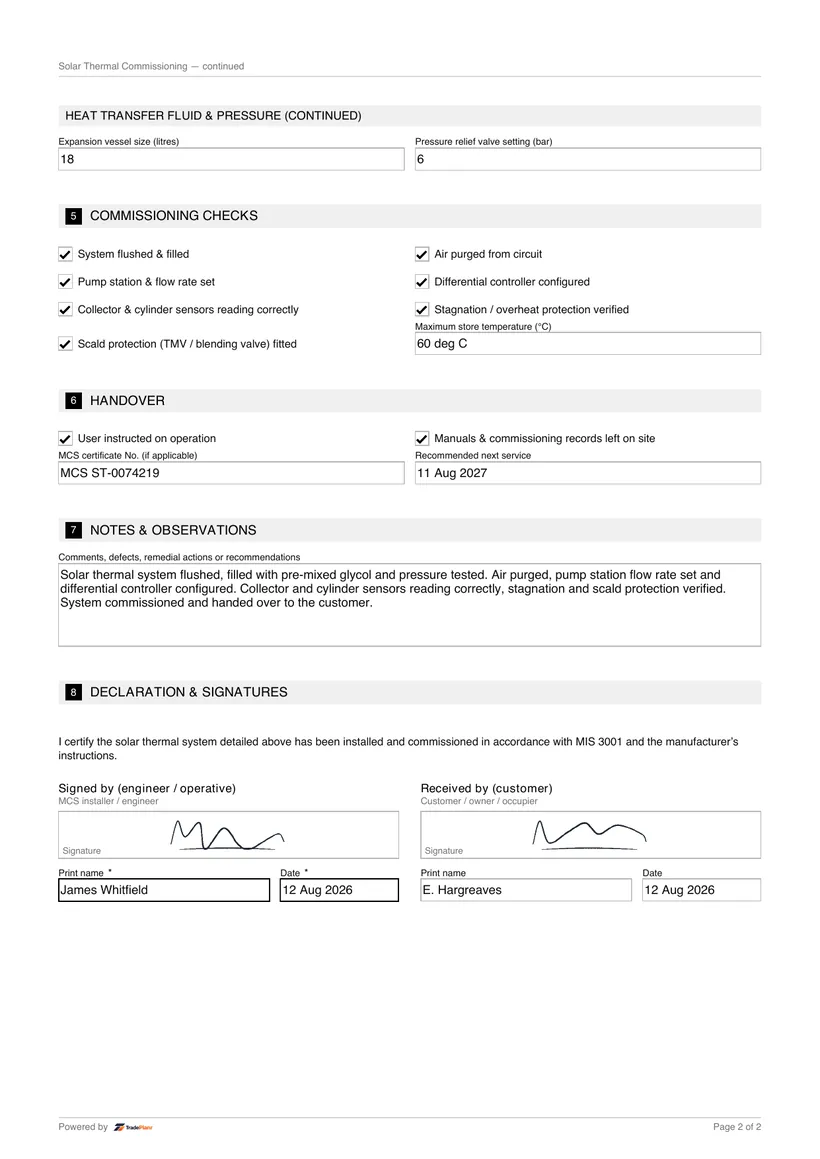
  • Expansion vessel and pressure relief valve checks
  • Commissioning: system flushed and filled, pump station flow rate set, controller and sensors configured
  • Stagnation behaviour and scald protection confirmed
  • Handover: user instructed, MCS certificate number and next service date, with signatures

When it's required

A commissioning record is completed whenever a solar thermal system is installed and handed over, and for MCS-accredited installers it forms part of the documentation behind the MCS certificate the customer receives.

Manufacturers typically require evidence of correct commissioning, including fluid concentration and pressures, to support warranty claims on collectors, pump stations and cylinders.

Where the installation interacts with the hot water system, for example an unvented cylinder, the commissioning paperwork sits alongside the G3 documentation and building regulations notification for the wider job.

How to issue it in TradePlanr

  1. 1

    Enter the system details

    Record the customer, address and your company, then log the collector make and type, flat plate or evacuated tube, the collector area and the cylinder the system serves.

  2. 2

    Check the fluid and pressures

    Record the glycol concentration and the frost protection temperature it gives, the system fill pressure, and confirm the expansion vessel charge and pressure relief valve operation.

  3. 3

    Commission the system

    Confirm the system has been flushed and filled, set and record the pump station flow rate, configure the controller and check the sensors read correctly.

  4. 4

    Confirm safety protection

    Verify the system's stagnation behaviour is safe and that scald protection is in place on the hot water supply, recording both on the certificate.

  5. 5

    Hand over and send the PDF

    Confirm the user has been instructed, record the MCS certificate number and next service date, then capture signatures and generate a branded PDF for the customer and your records.

Issue this certificate from your phone or the web

TradePlanr generates this and 45+ other gas, electrical, oil, plumbing and renewables certificates as proper PDFs — filled on site, signed on screen and stored against the job. Works even with no signal. Free to start.

Frequently asked questions

What is MCS MIS 3001?

MIS 3001 is the MCS installation standard for solar heating systems. It sets out the requirements MCS-accredited installers must meet on design, installation and commissioning of solar thermal, and the commissioning certificate records the checks that satisfy it.

Why is the glycol concentration recorded?

The heat transfer fluid protects the collector circuit from freezing and degrades over time at high temperatures. Recording the concentration and the frost protection temperature it provides at commissioning gives a baseline for future service checks.

What is stagnation and why does it matter?

Stagnation happens when the cylinder is up to temperature and the collector keeps heating, driving very high temperatures and pressures in the circuit. Commissioning confirms the expansion vessel and pressure relief valve can handle it safely.

Does the customer need anything else at handover?

They should be shown how the system and controller work, given the user instructions and told the next service date. MCS-accredited installs also come with an MCS certificate, and the number is recorded on the commissioning paperwork.

Start Now — It's Free

Free to start · No card · No download needed — works in your browser

Download on the App StoreGet it on Google Play