

BS 7346-8

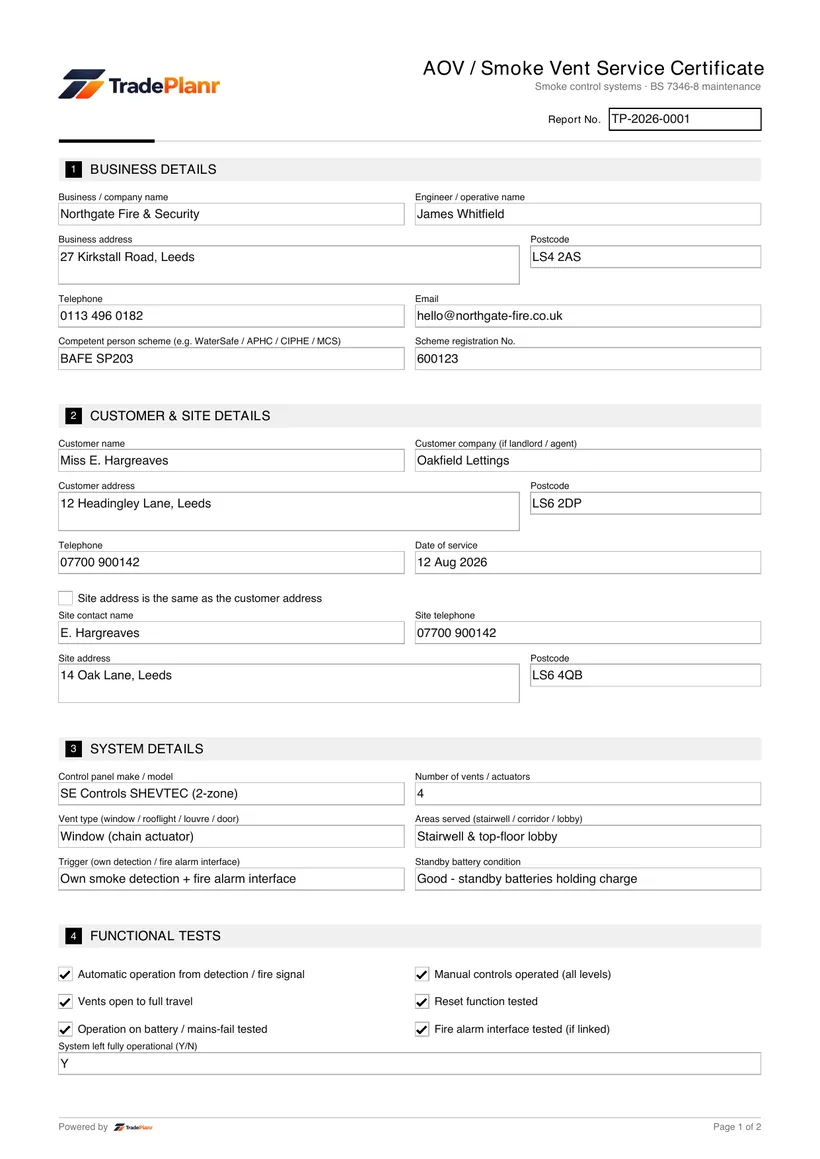
AOV / Smoke Vent Service Certificate (BS 7346-8)

Fill it in on site, sign on screen, and send a professional AOV PDF before you leave the job.

Free to build · Send it with a 7-day free trial

An AOV service certificate records the maintenance of automatic opening vents and smoke control systems, carried out in line with BS 7346-8, the code of practice for planning, design, installation, commissioning and maintenance of smoke control systems. AOVs keep escape routes clear of smoke, so proving they still open on demand is a life-safety check, not a box-ticking exercise.

Under the Regulatory Reform (Fire Safety) Order the responsible person must maintain smoke control systems in working order, and the common parts of blocks of flats are a particular focus. Fire risk assessors, managing agents and enforcing authorities all expect to see regular service records for AOVs, smoke shafts and stairwell vents.

TradePlanr lets you complete the certificate on your phone or tablet as you test: log the panel, vents and areas served, work through the functional tests including battery back-up and the fire alarm interface, record defects and produce a branded PDF for the responsible person before you leave.

What it covers

  • The building, responsible person and servicing company details
  • System details: the control panel, number and location of vents, actuator types and the areas served
  • Automatic operation test triggered from smoke detection
  • Manual control tests from break-glass points and switches
  • Confirmation each vent achieves full travel and resets correctly
  • Battery back-up and mains-failure operation checks
  • The interface with the fire alarm system where fitted
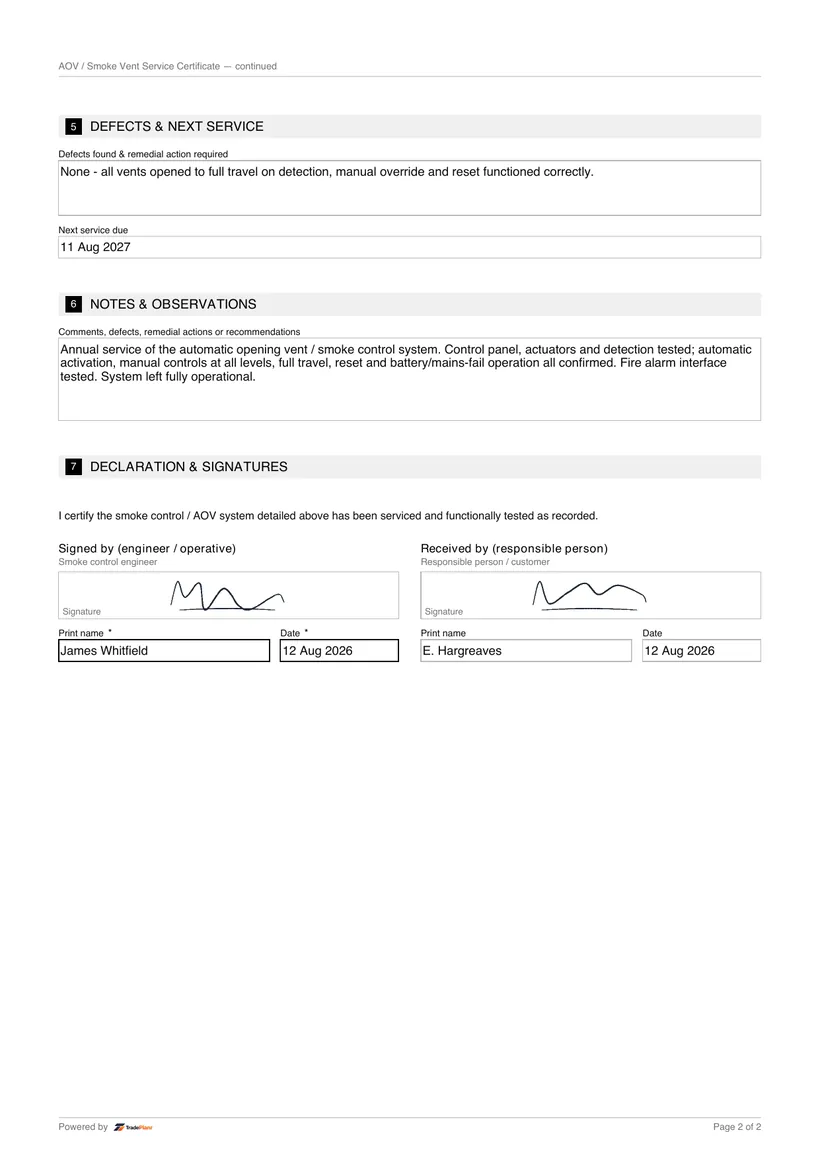
  • Defects found, remedial work required and the next service due date

When it's required

The Regulatory Reform (Fire Safety) Order requires the responsible person to maintain smoke control systems in efficient working order, and regular servicing with certificates is the accepted way to evidence it.

AOVs in the common parts of blocks of flats are a particular focus for fire risk assessors and enforcing authorities, and managing agents typically schedule servicing at least annually with interim checks.

A service certificate should be issued at each visit so the building's fire safety records show a continuous maintenance history for the smoke control system.

How to issue it in TradePlanr

  1. 1

    Enter the building and system details

    Record the building, responsible person and your company, then log the control panel, the vents and actuators fitted and the areas each one serves.

  2. 2

    Test automatic operation

    Trigger the system from smoke detection and confirm the vents open automatically as designed, recording the result for each vent.

  3. 3

    Test manual controls and travel

    Operate the manual controls, confirm every vent achieves full travel and resets correctly, and check operation on battery back-up and mains failure.

  4. 4

    Check the fire alarm interface

    Where the smoke control system is interfaced with the fire alarm, test the interface and record that the cause-and-effect operates as intended.

  5. 5

    Sign and send the PDF

    Log any defects with the remedial work required, set the next service due date, then sign and generate a branded PDF for the responsible person and your records.

Issue this certificate from your phone or the web

TradePlanr generates this and 45+ other gas, electrical, oil, plumbing and renewables certificates as proper PDFs — filled on site, signed on screen and stored against the job. Works even with no signal. Free to start.

Frequently asked questions

What is an AOV and why does it need servicing?

An automatic opening vent opens on smoke detection to ventilate escape routes such as stairwells and corridors. If it fails, escape routes can fill with smoke, so regular servicing proves the vents, controls and batteries still work.

How often should AOVs and smoke vents be serviced?

BS 7346-8 expects planned maintenance of smoke control systems, and in practice managing agents schedule servicing at least annually with interim functional checks. Each visit should be recorded on a certificate.

Who is responsible for maintaining smoke control systems?

The responsible person under the Fire Safety Order — typically the building owner or managing agent for the common parts of flats. They usually contract the servicing to a specialist, and the certificate evidences the duty has been met.

What does an AOV service visit cover?

Automatic operation from smoke detection, manual controls, full travel and reset of each vent, battery back-up and mains-failure checks, and the fire alarm interface where fitted, with any defects recorded for remedial action.

Start Now — It's Free

Free to start · No card · No download needed — works in your browser

Download on the App StoreGet it on Google Play