

How often does a dry riser need testing?
BS 9990 calls for an annual wet pressure test at 10 bar, held to prove the main is sound, plus a visual inspection every six months covering the inlet, landing valves and signage.
Fill it in on site, sign on screen, and send a professional Dry Riser PDF before you leave the job.
Free to build · Send it with a 7-day free trial
Need a Dry Riser for your own property? It's issued by the tradesperson who does the work — TradePlanr is the app they use.
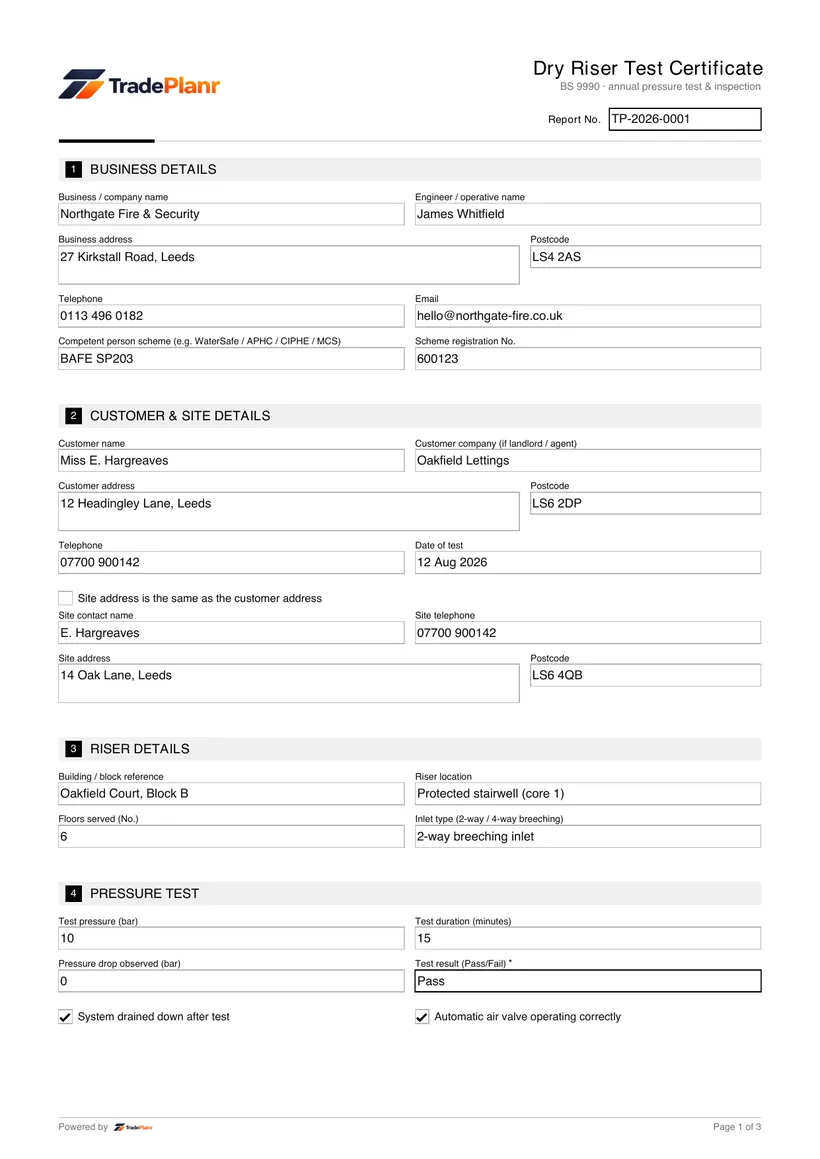
A dry riser test certificate records the inspection and testing of a dry rising main under BS 9990, the standard for non-automatic fire-fighting systems in buildings. Dry risers let the fire and rescue service pump water up through a building, so BS 9990 calls for an annual wet pressure test at 10 bar alongside a six-monthly visual inspection.
For fire protection companies and building managers, the certificate is the evidence that the riser will actually deliver water when the fire service connects to it. The responsible person under the Fire Safety Order must maintain the riser, and fire risk assessors, enforcing authorities and insurers will expect to see current test certificates.
TradePlanr lets you complete the certificate on your phone or tablet as you test: log the riser and inlet details, record the test pressure, duration and any pressure drop, work through the landing valves floor by floor and produce a branded PDF for the building manager before you leave.
BS 9990 calls for a wet pressure test of the dry rising main at 10 bar annually, plus a visual inspection every six months, with a certificate issued for each so the maintenance record is continuous.
The responsible person under the Regulatory Reform (Fire Safety) Order must keep fire-fighting facilities, including dry risers, maintained and in working order, and test certificates are the standard evidence.
Blocks of flats, commercial buildings and any premises with a dry riser will be asked for current certificates by fire risk assessors, the fire and rescue service and insurers.
Record the building, responsible person and your company, then identify the riser, the floors it serves and the inlet type.
Charge the main and log the test pressure, duration and any pressure drop, then record the overall pass or fail result for the annual 10 bar test.
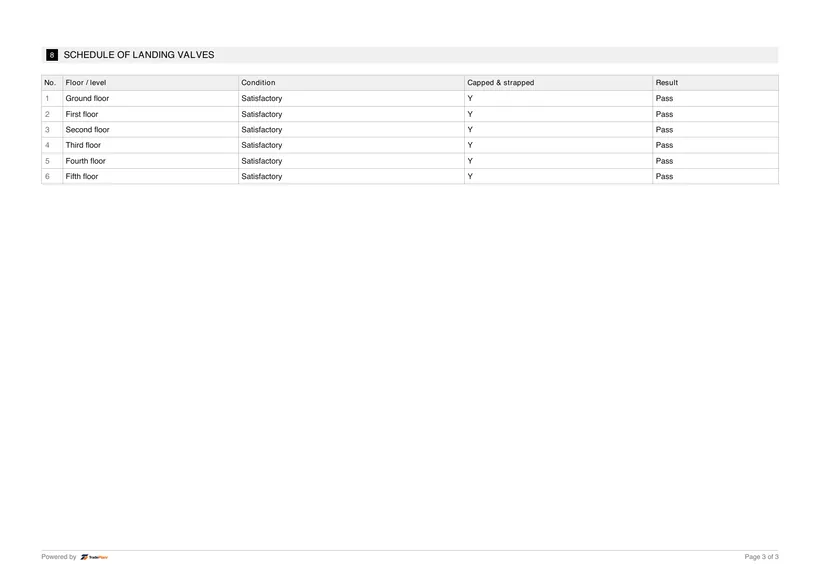
Work through the landing valve schedule, recording the condition and operation of the outlet valve on each floor served.
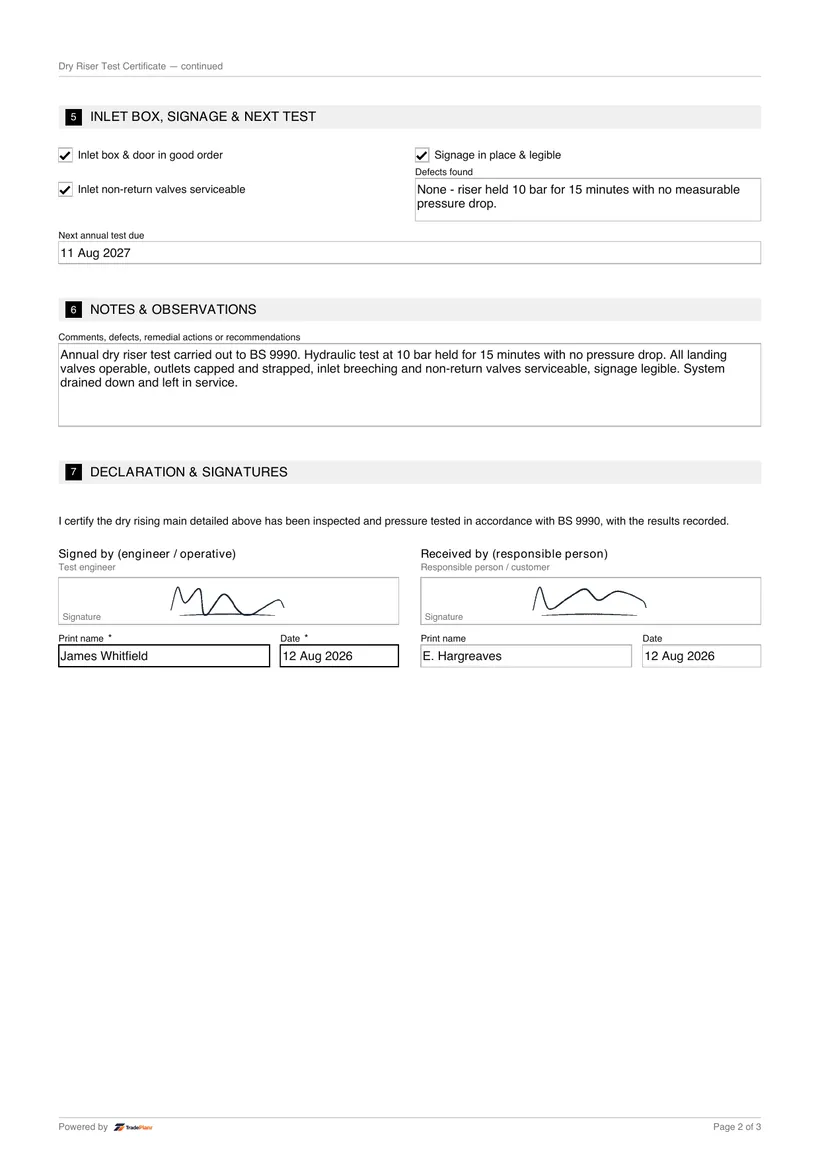
Check the inlet breeching, inlet box and door, and confirm the signage is present and legible, logging any defects for remedial action.
Set the next test due date, add your signature and generate a branded PDF for the building manager, with a copy stored against the job.
This work comes due again every 12 months. When it does, TradePlanr texts your customer from your business name with a link to book you in — so the repeat job comes back to you, not whoever they find on Google.
TradePlanr generates this and 79 other gas, electrical, oil, plumbing and renewables certificates as proper PDFs — filled on site, signed on screen and stored against the job. Works even with no signal. Free to start.
BS 9990 calls for an annual wet pressure test at 10 bar, held to prove the main is sound, plus a visual inspection every six months covering the inlet, landing valves and signage.
The riser is charged with water to 10 bar and held while the tester checks for pressure drop and leaks, then each landing valve is inspected. The certificate records the pressure, duration, any drop and the result.
The responsible person for the building under the Fire Safety Order, typically the building owner or managing agent. They usually contract the testing to a fire protection company, and the certificate evidences the duty has been met.
Defects such as leaking valves, missing blank caps or damaged inlets are recorded on the certificate with the remedial work required. The riser should be repaired and retested, as a failed riser could leave fire crews without water at height.
TradePlanr Agency builds custom-coded, SEO-optimised websites and runs Google Ads for UK trades — from £375, by the team behind TradePlanr.
Explore TradePlanr Agency