


How often do fire extinguishers need servicing?
A basic service every twelve months by a competent person, an extended service with discharge test at five years for most types, and an overhaul at ten years for CO2 extinguishers, following BS 5306-3.
Fill it in on site, sign on screen, and send a professional Extinguisher PDF before you leave the job.
Free to build · Send it with a 7-day free trial
Need a Extinguisher for your own property? It's issued by the tradesperson who does the work — TradePlanr is the app they use.
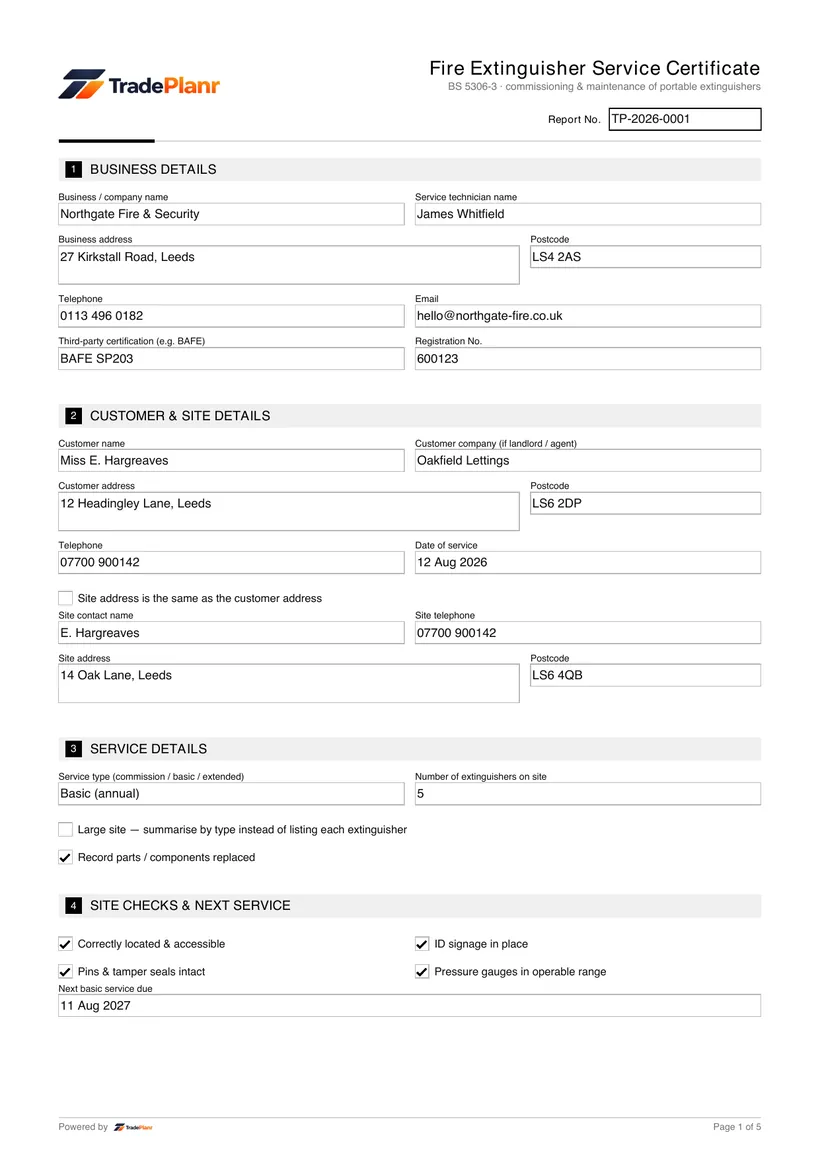
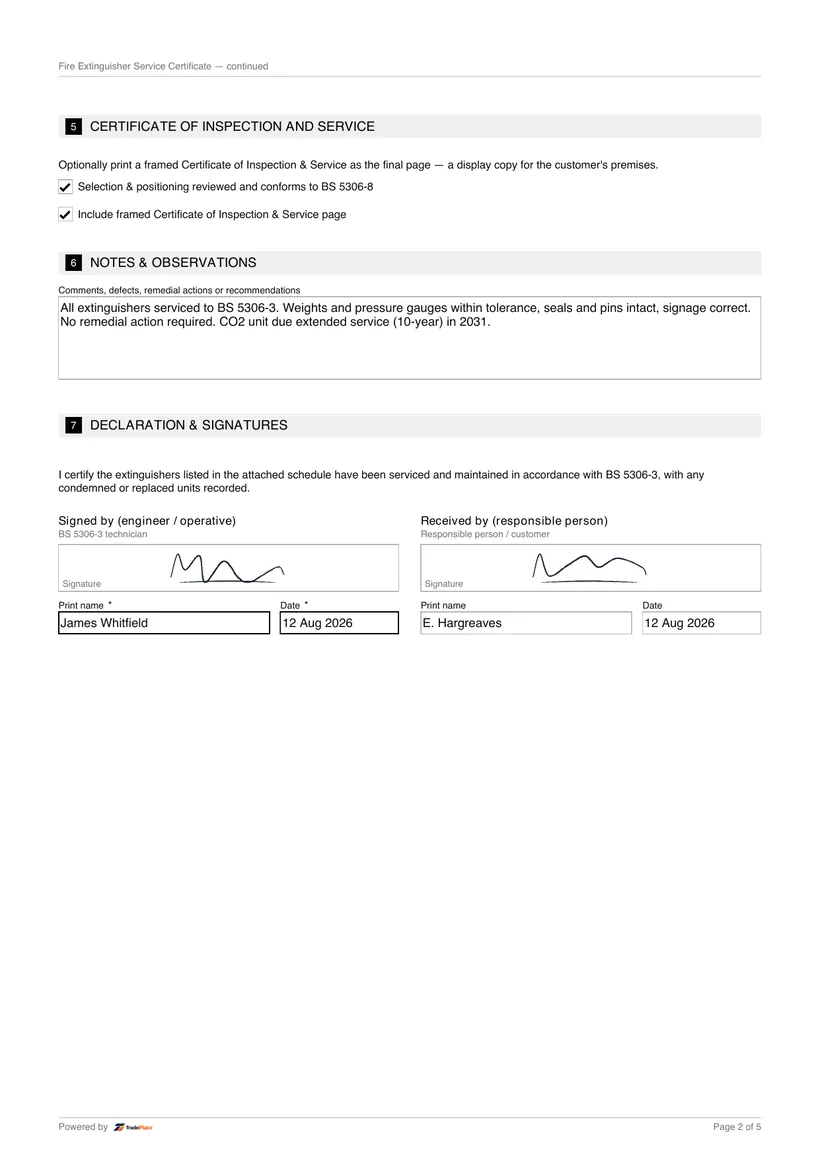
A fire extinguisher service certificate records the commissioning and maintenance of portable fire extinguishers to BS 5306-3, confirming each extinguisher on the premises has been inspected by a competent person and is ready for use.
Under the fire safety legislation the responsible person must keep firefighting equipment maintained, and BS 5306-3 sets the recognised service regime: a basic service every year, an extended service at five years for most types, and an overhaul at ten years for CO2 extinguishers.
TradePlanr lets you log every extinguisher, its location, condition and service outcome on site and produce a clear PDF certificate for the responsible person's fire safety records.
Portable extinguishers should be commissioned when first put in place and then given a basic service every twelve months by a competent person, with the maintenance label updated at each visit.
BS 5306-3 also requires an extended service, including a discharge test, every five years for water, foam and powder extinguishers, and an overhaul at ten years for CO2 extinguishers.
The certificate gives the responsible person the evidence they need under the Regulatory Reform (Fire Safety) Order 2005 that firefighting equipment is being maintained, ready for inspections, audits and insurers.
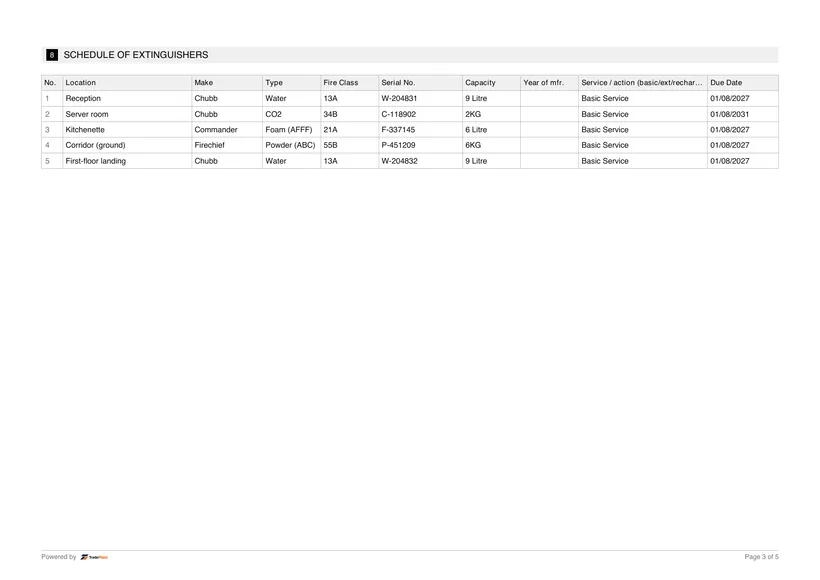
Record the site, the responsible person and the areas covered, then list each extinguisher with its location, type, size and serial number.
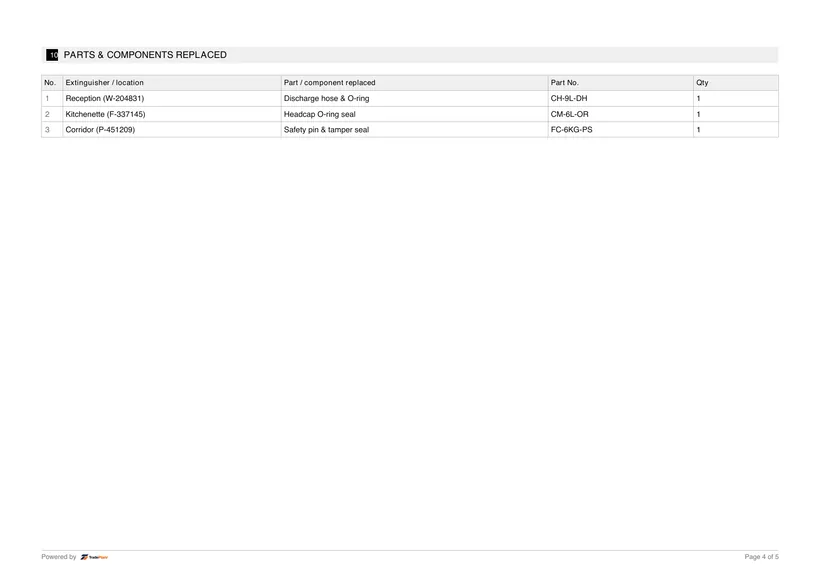
Work through the BS 5306-3 checks for each unit, recording condition, readings, parts replaced and whether it passed, was recharged or was condemned.
Summarise the service carried out, note any replacements recommended and set the next basic and extended service dates.
Capture the signature, generate the PDF service certificate and store it against the site, ready to send to the responsible person for their fire log book.
This work comes due again every 12 months. When it does, TradePlanr texts your customer from your business name with a link to book you in — so the repeat job comes back to you, not whoever they find on Google.
TradePlanr generates this and 79 other gas, electrical, oil, plumbing and renewables certificates as proper PDFs — filled on site, signed on screen and stored against the job. Works even with no signal. Free to start.
A basic service every twelve months by a competent person, an extended service with discharge test at five years for most types, and an overhaul at ten years for CO2 extinguishers, following BS 5306-3.
A competent person with the training, tools and access to spares that BS 5306-3 requires, commonly a technician certified under a recognised extinguisher maintenance scheme.
Yes. The Regulatory Reform (Fire Safety) Order 2005 requires the responsible person to keep firefighting equipment maintained and in working order, and the service certificate is the evidence.
Yes. TradePlanr lets you log each extinguisher, its checks and outcome, capture the signature and produce the PDF before you leave the premises.
Design, installation, commissioning and acceptance records for fire detection systems to BS 5839.
Installation, commissioning and periodic test records for emergency lighting to BS 5266.
The inspection record for fire doors under the Fire Safety (England) Regulations 2022 and BS 8214.
TradePlanr Agency builds custom-coded, SEO-optimised websites and runs Google Ads for UK trades — from £375, by the team behind TradePlanr.
Explore TradePlanr Agency