

What is a gas tightness test?
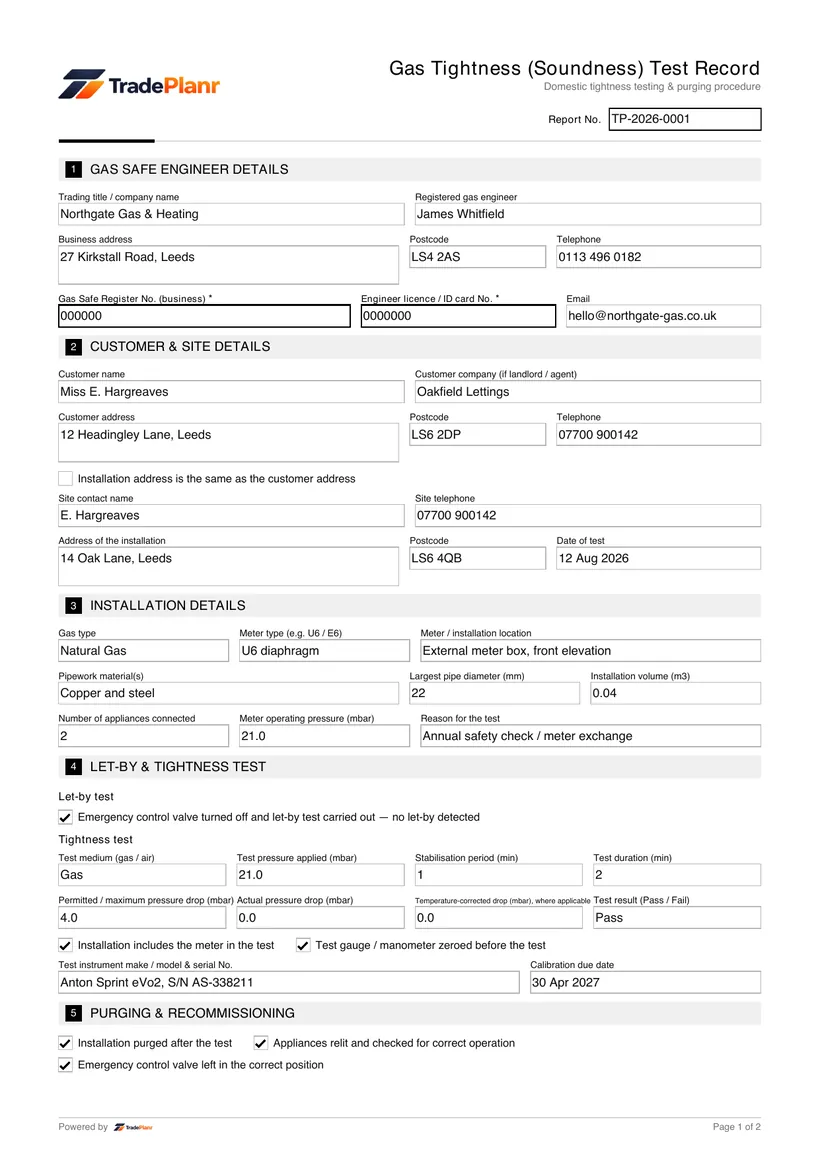
It is a test of gas pipework to confirm it is sound and free from leaks, carried out to IGEM/UP/1B on domestic installations.
Fill it in on site, sign on screen, and send a professional Tightness PDF before you leave the job.
Free to build · Send it with a 7-day free trial
Need a Tightness for your own property? It's issued by the tradesperson who does the work — TradePlanr is the app they use.
A gas tightness, or soundness, test certificate records the let-by and tightness test carried out on a domestic gas installation to confirm the pipework is sound and free from leaks.
The test is carried out to the industry procedure IGEM/UP/1B, which sets out how to test and purge domestic-sized gas installations.
TradePlanr lets you record the test on your phone, capture your gauge readings and results, and issue a clear PDF as evidence the installation passed.
A tightness test is carried out after work on gas pipework, when a new installation is completed, or where a leak is suspected. It confirms the installation is sound before it is put back into use.
Testing to the recognised procedure is part of safe working practice under the Gas Safety (Installation and Use) Regulations 1998, and the certificate provides documented evidence of the result.
The test must be carried out by a Gas Safe registered engineer competent for the installation being tested.
Open TradePlanr and start a job for the property, adding the customer and installation details.
Select the gas tightness test template so the let-by, stabilisation and tightness fields are ready.
Enter the test pressure, stabilisation period, permitted and actual pressure drop, and the let-by and tightness results.
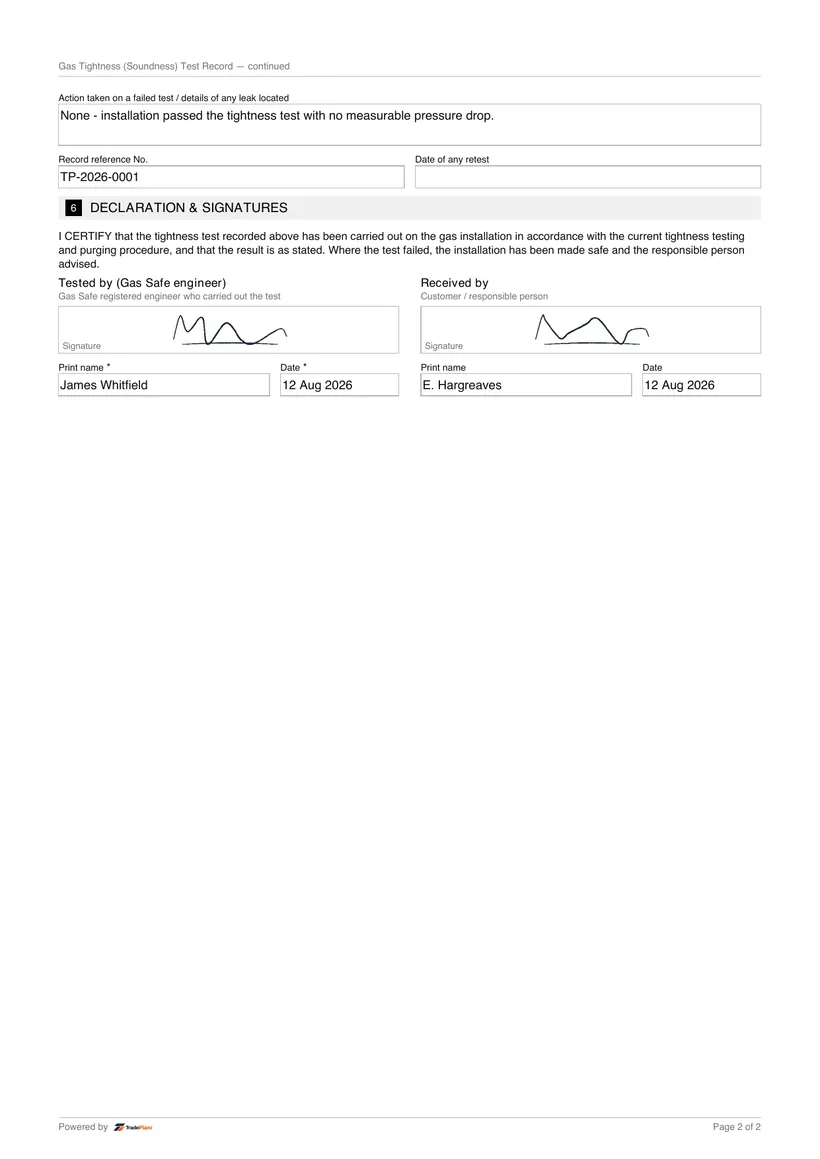
Sign on screen and send or store the completed tightness test PDF as evidence the installation is sound.
TradePlanr generates this and 79 other gas, electrical, oil, plumbing and renewables certificates as proper PDFs — filled on site, signed on screen and stored against the job. Works even with no signal. Free to start.
It is a test of gas pipework to confirm it is sound and free from leaks, carried out to IGEM/UP/1B on domestic installations.
It is needed after work on pipework, when a new installation is completed, or where a leak is suspected, before the gas is put back into use.
A Gas Safe registered engineer competent for the installation must carry out and record the tightness test.
Yes. TradePlanr lets you enter your readings on site, sign on screen and send the PDF straight away.
The strength, tightness and purge record for larger and commercial gas pipework to IGEM/UP/1A.
The safety check record for domestic gas appliances, issued after an installation or check.
The Benchmark commissioning checklist completed when a boiler or heating system is installed.
TradePlanr Agency builds custom-coded, SEO-optimised websites and runs Google Ads for UK trades — from £375, by the team behind TradePlanr.
Explore TradePlanr Agency