

Who can issue a domestic gas safety certificate?
Only a Gas Safe registered engineer can legally work on and certify domestic gas appliances and pipework. The certificate records their registration details.
Fill it in on site, sign on screen, and send a professional Domestic PDF before you leave the job.
Free to build · Send it with a 7-day free trial
Need a Domestic for your own property? It's issued by the tradesperson who does the work — TradePlanr is the app they use.
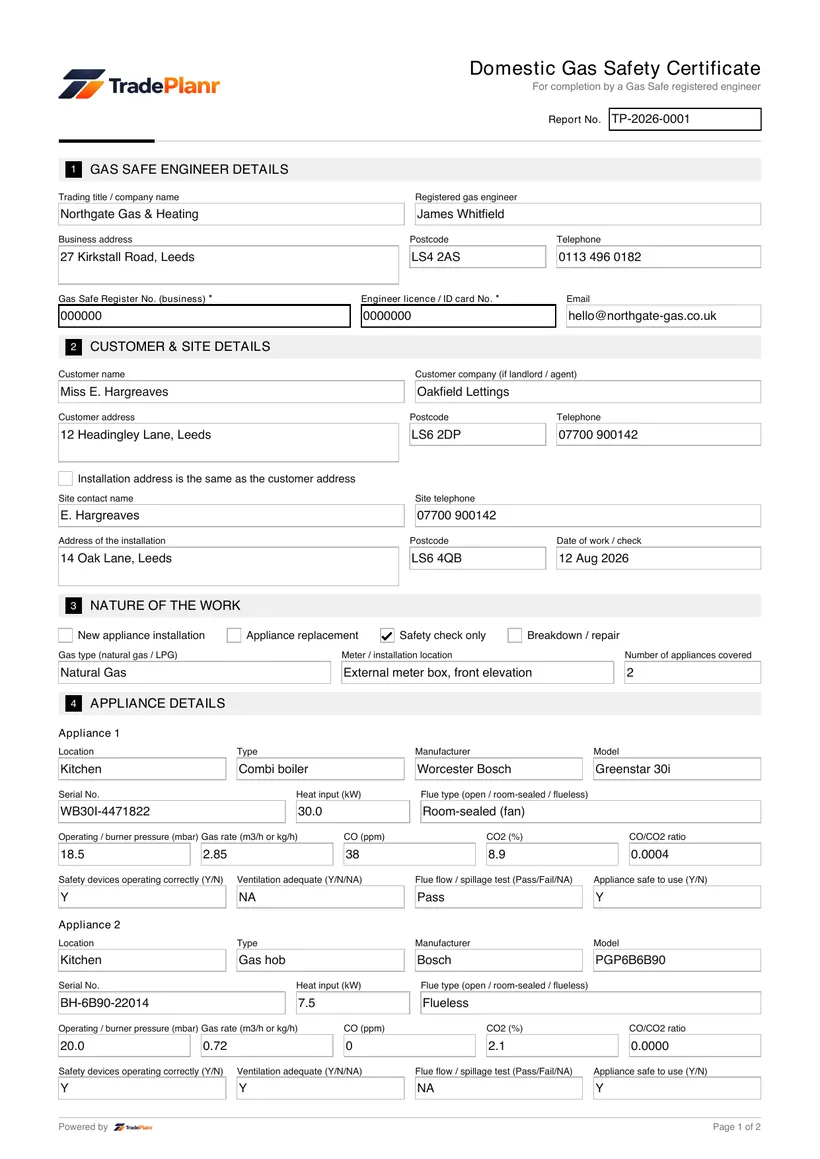
If you're a Gas Safe registered engineer, TradePlanr lets you issue a domestic gas safety certificate from your phone while you're still at the property — appliances, readings, flue checks and signatures, finished and sent as a professional PDF before you're back in the van.
The certificate records the checks carried out on gas appliances and their associated pipework and flues in a home, giving the householder written evidence that appliances have been tested and left in a safe condition. The checks reflect the duties set out in the Gas Safety (Installation and Use) Regulations 1998, which require gas work to be carried out safely by a competent registered engineer.
Every certificate you issue is stored against the job and the customer, so next year's service reminder, the repeat certificate and the invoice are all two taps away.
A domestic gas safety check is good practice whenever gas appliances are installed, serviced or need reassurance that they are operating safely. Many homeowners request one after buying a property or when they suspect a fault.
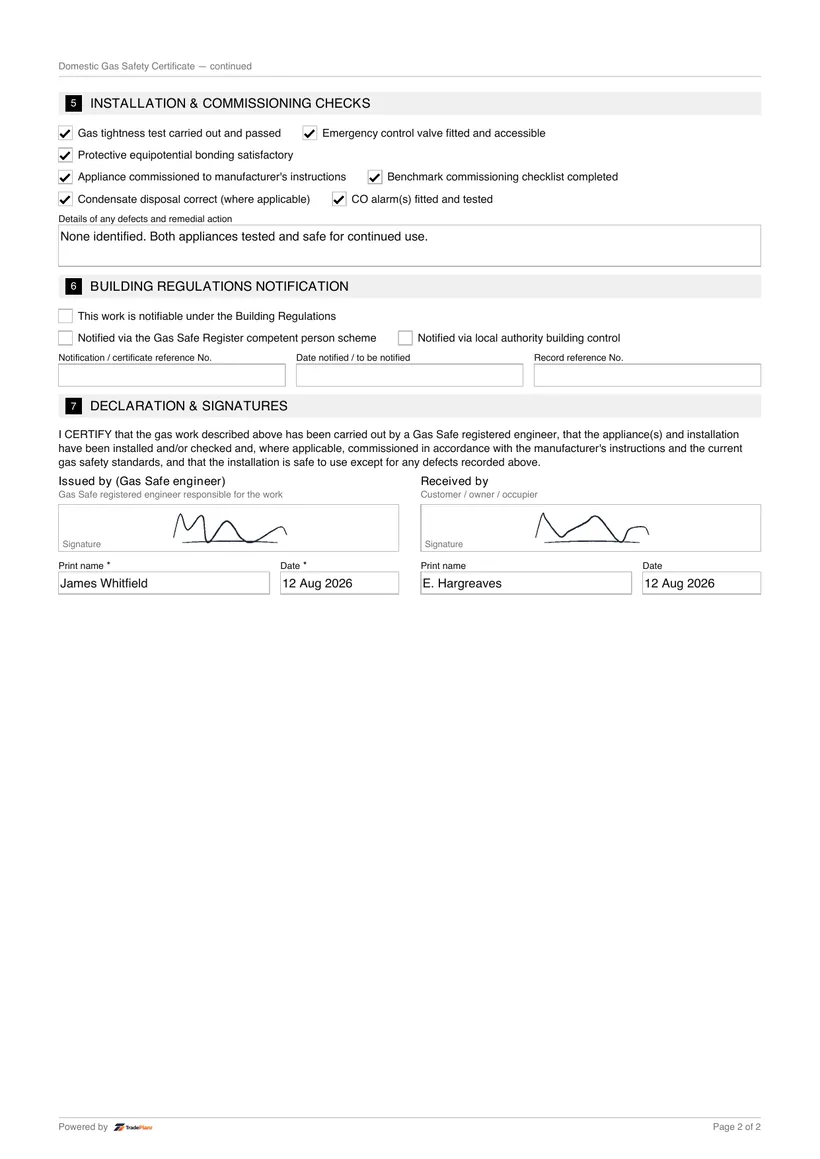
The work must be carried out by a Gas Safe registered engineer. Only a registered engineer may legally work on gas appliances and pipework, and the certificate should record that engineer's registration details.
While an annual check is a legal duty for landlords, homeowners are not legally required to hold a certificate. Regular checks are strongly recommended to keep appliances safe and efficient.
Open TradePlanr and start a job for the property, adding the customer and address details.
Select the domestic gas safety certificate template so the correct appliance and check fields are ready to complete.
Enter each appliance, operating pressure, combustion readings, flue and ventilation checks and confirm the safety device results as you work.
Sign on screen, have the customer sign if present, then send or store the finished PDF instantly.
TradePlanr generates this and 79 other gas, electrical, oil, plumbing and renewables certificates as proper PDFs — filled on site, signed on screen and stored against the job. Works even with no signal. Free to start.
Only a Gas Safe registered engineer can legally work on and certify domestic gas appliances and pipework. The certificate records their registration details.
There is no fixed legal expiry for a homeowner's check, but an annual gas safety check is widely recommended to keep appliances safe.
No. Homeowners are not legally required to hold one, but landlords must arrange an annual check under the Gas Safety (Installation and Use) Regulations 1998.
Yes. With TradePlanr you complete the record on site, sign on screen and send the customer a PDF without paper forms.
A CP12 is the landlord gas safety record — the annual check landlords are legally required to arrange for rented properties. A domestic gas safety certificate covers the same kind of appliance checks for homeowners, where the check is recommended rather than legally required. TradePlanr has separate templates for both.
Use the gas service and maintenance record alongside the safety certificate — both templates share the job and customer details in TradePlanr, so you enter the property information once and issue both PDFs from the same visit.
The annual landlord gas safety record (CP12) for rented properties — up to six appliances.
The service and maintenance record issued when a gas appliance is serviced.
The let-by and tightness test record for domestic gas installations to IGEM/UP/1B.
TradePlanr Agency builds custom-coded, SEO-optimised websites and runs Google Ads for UK trades — from £375, by the team behind TradePlanr.
Explore TradePlanr Agency