

BS 7593:2019

Powerflush Certificate (BS 7593:2019)

A powerflush certificate records that a central heating system has been chemically cleaned and dosed with inhibitor in line with BS 7593:2019, the standard for the treatment of water in domestic hot water heating systems. It confirms the system was cleaned and protected against corrosion and scale.

Many boiler manufacturers require evidence of system cleaning and inhibitor dosing to keep the boiler warranty valid. A clear powerflush record protects the installation and gives the customer confidence the system was treated properly.

TradePlanr lets you record the flush process, water tests and inhibitor dose on site and produce a professional PDF certificate, so the cleaning is documented without extra paperwork.

Issue this certificate from your phone

TradePlanr generates this and 35+ other gas, electrical, oil, plumbing and renewables certificates as proper PDFs — filled on site, signed on screen and stored against the job. Works even with no signal. Free to download.

Download on the App StoreGet it on Google Play

What it covers

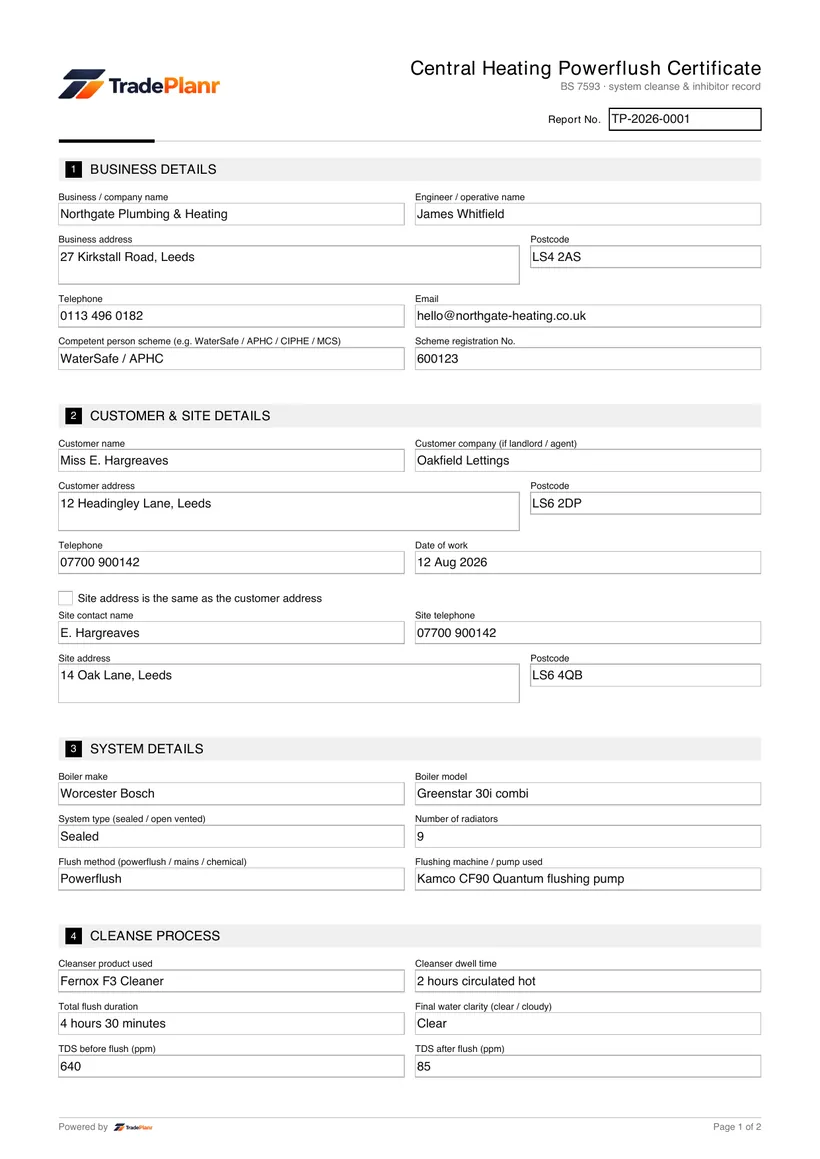
  • Property and customer details plus system type and number of radiators
  • Method of cleaning, such as chemical or power flush
  • Cleaning chemicals used and dwell or circulation time
  • Water test results before and after flushing where taken
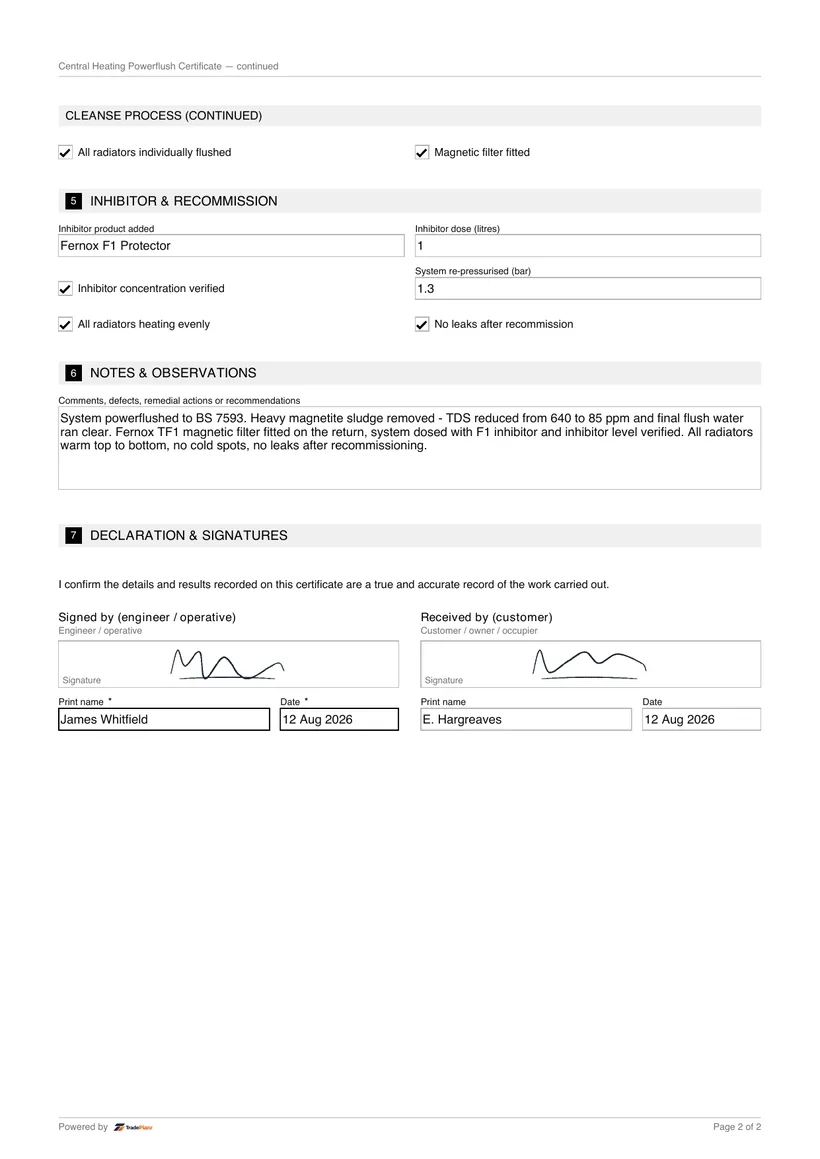
  • Inhibitor brand and dose added to protect the system
  • Confirmation of system cleanliness on completion in line with BS 7593
  • Installer details and dated sign-off

When it's required

A powerflush or chemical clean is commonly carried out before a new boiler is fitted to an existing system, or where a system is sludged and underperforming. BS 7593:2019 sets out the recommended approach to cleaning and ongoing water treatment.

Boiler manufacturers frequently make system cleaning and inhibitor dosing a condition of the warranty, so a certificate is often needed to support a warranty claim.

The record is handed to the customer and kept with the boiler documentation, and may be requested during a warranty claim, service visit or property sale.

How to issue it in TradePlanr

  1. 1

    Enter system and job details

    Record the property, system type and number of radiators, along with the reason for the flush, so the certificate describes the work accurately.

  2. 2

    Record the flush and chemicals

    Log the cleaning method, the chemicals used and the circulation time, in line with the BS 7593 approach to cleaning the system.

  3. 3

    Log water tests and inhibitor dose

    Enter any before and after water test results and the inhibitor brand and dose added to protect the system against corrosion and scale.

  4. 4

    Sign and store the PDF

    Capture the customer signature, generate the PDF powerflush certificate and store it against the job, ready to send to the customer or manufacturer.

Frequently asked questions

Why do boiler warranties need a powerflush certificate?

Manufacturers often require evidence that the system was cleaned and dosed with inhibitor before a new boiler was fitted. A BS 7593 powerflush certificate provides that evidence and helps keep the warranty valid.

What is BS 7593:2019?

It is the British Standard covering the treatment of water in domestic hot water central heating systems, including cleaning, flushing and the use of corrosion inhibitor. The certificate references this standard.

Do I need to record the inhibitor dose?

Yes. The inhibitor brand and dose are a key part of the record, because they show the system has been protected against corrosion and scale after cleaning.

Can I issue the certificate on site?

Yes. TradePlanr lets you record the flush, water tests and inhibitor dose, capture the signature and produce the PDF at the property.

No card required · Free to start · iPhone, Android & web