

Installation & handover record

Access Control Commissioning Certificate

Fill it in on site, sign on screen, and send a professional Access Control PDF before you leave the job.

Free to build · Send it with a 7-day free trial

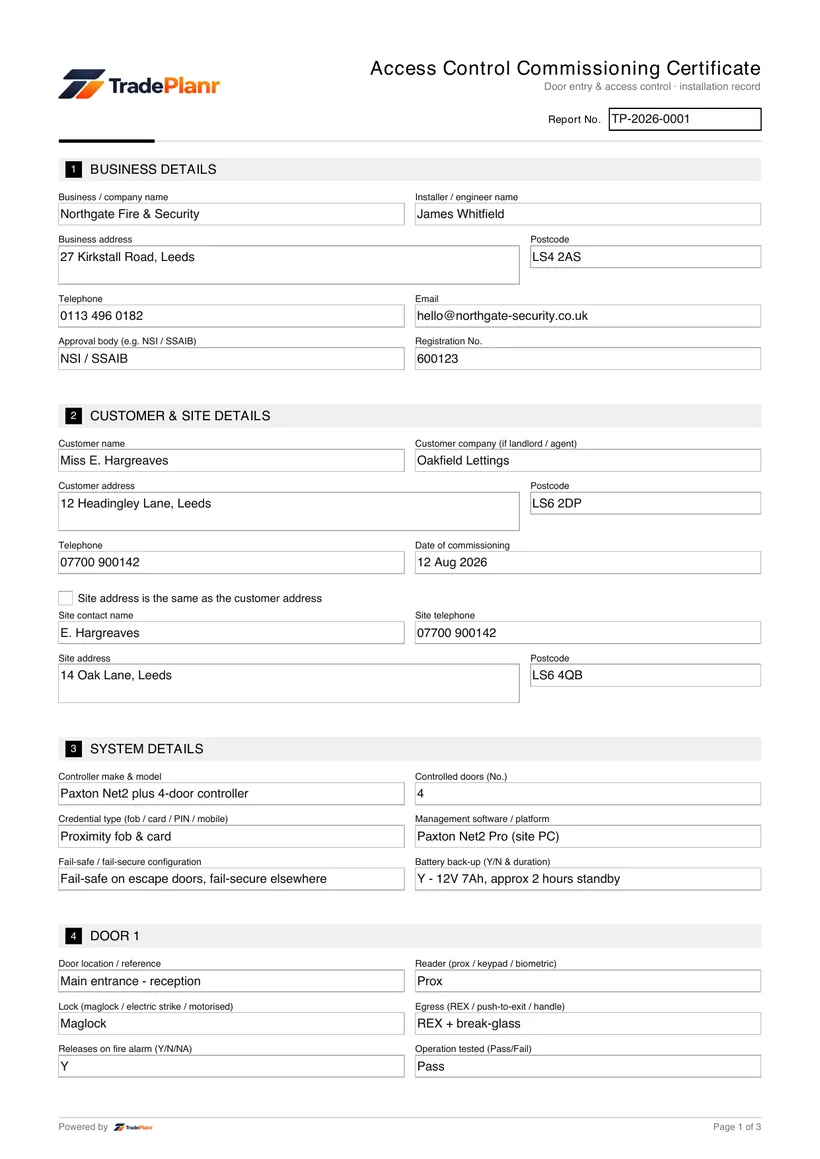
An access control commissioning certificate records that an access control system has been installed, configured and tested at handover. It captures the controller and credential types fitted, whether each lock is fail-safe or fail-secure, and the door-by-door tests that prove readers, egress devices and — critically — the fire alarm release interface all work as intended.

It is completed whenever a new access control installation is handed over, and the fire-safety checks are the reason it matters most. Locked doors on escape routes must release when the fire alarm operates and fail safe on power loss, in line with Approved Document B and the interface recommendations of BS 7273-4, so commissioning is where that behaviour is proven and evidenced.

TradePlanr lets you complete the certificate on your phone or tablet at the site, test each door in turn against the schedule, record the fire-release and mains-fail tests, capture the customer's signature and issue a branded PDF on site with a copy stored against the job.

What it covers

  • System details including the controller make and model and the credential types in use (fob, card, PIN, mobile)
  • Whether each lock is configured fail-safe or fail-secure, and the battery backup fitted
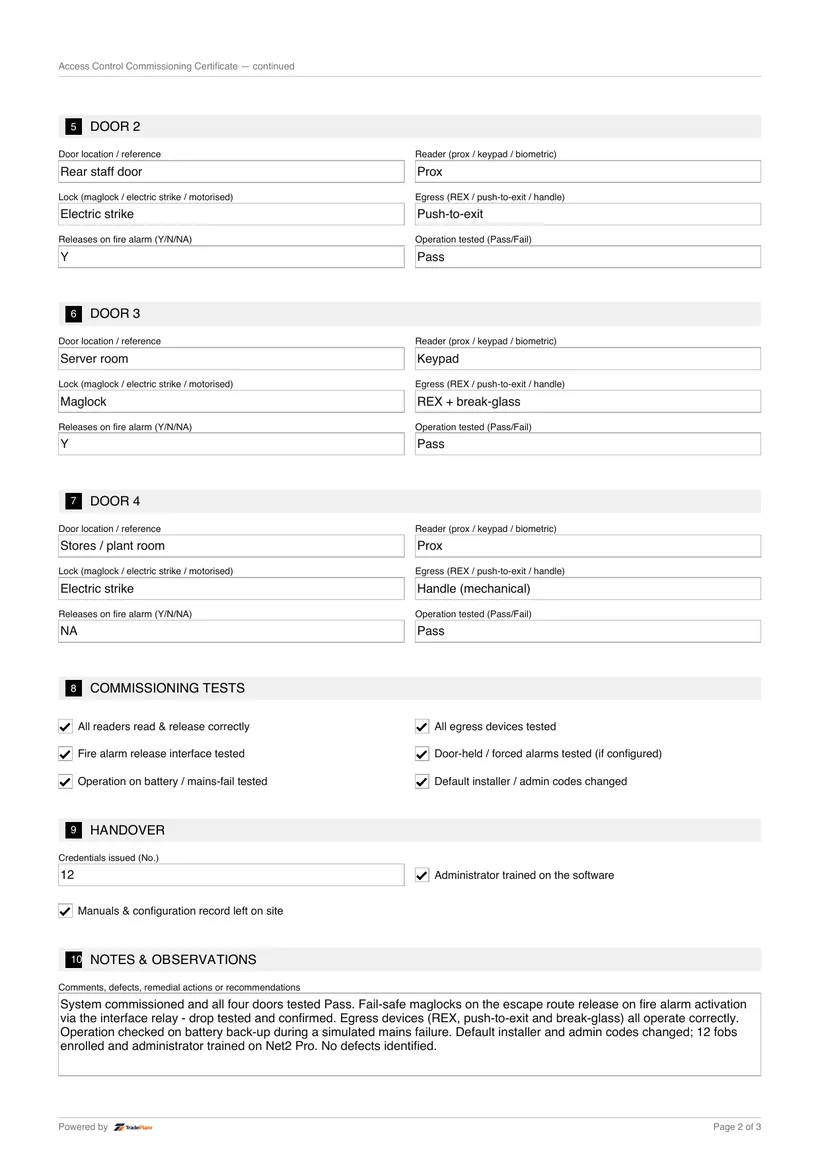
  • A door schedule covering up to four doors, with the reader, lock and egress device fitted at each
  • Confirmation that the fire-release has been tested at every door on the schedule
  • Commissioning tests including readers, egress devices, the fire alarm release interface and door-held alarms
  • A mains-fail test showing how the system and each lock behave on loss of power
  • Handover details including the credentials issued and the admin training given

When it's required

Access control is fire-safety critical. Electrically locked doors on escape routes must fail safe and release when the fire alarm operates, in line with Approved Document B and the actuation recommendations of BS 7273-4, and the commissioning certificate is the evidence those tests were carried out.

On commercial handover, the responsible person needs a record of how the system was configured — which doors fail safe, what happens on mains failure and who holds credentials — to support their fire risk assessment and day-to-day management of the building.

A signed certificate also protects the installer. If a locked door is later questioned after an incident or audit, the certificate shows each door's egress and fire-release behaviour was tested and demonstrated at handover.

How to issue it in TradePlanr

  1. 1

    Enter the system details

    Record the controller make and model, the credential types in use, whether each lock is fail-safe or fail-secure and the battery backup fitted.

  2. 2

    Complete the door schedule

    Log the reader, lock and egress device at each door, and test and record the fire-release at every door on the schedule.

  3. 3

    Run the commissioning tests

    Test the readers, egress devices, the fire alarm release interface and door-held alarms, then carry out a mains-fail test to prove how the system behaves on loss of power.

  4. 4

    Record the handover

    Log the credentials issued to the customer and the admin training given so there is a clear record of who can manage the system from day one.

  5. 5

    Sign and issue the PDF on site

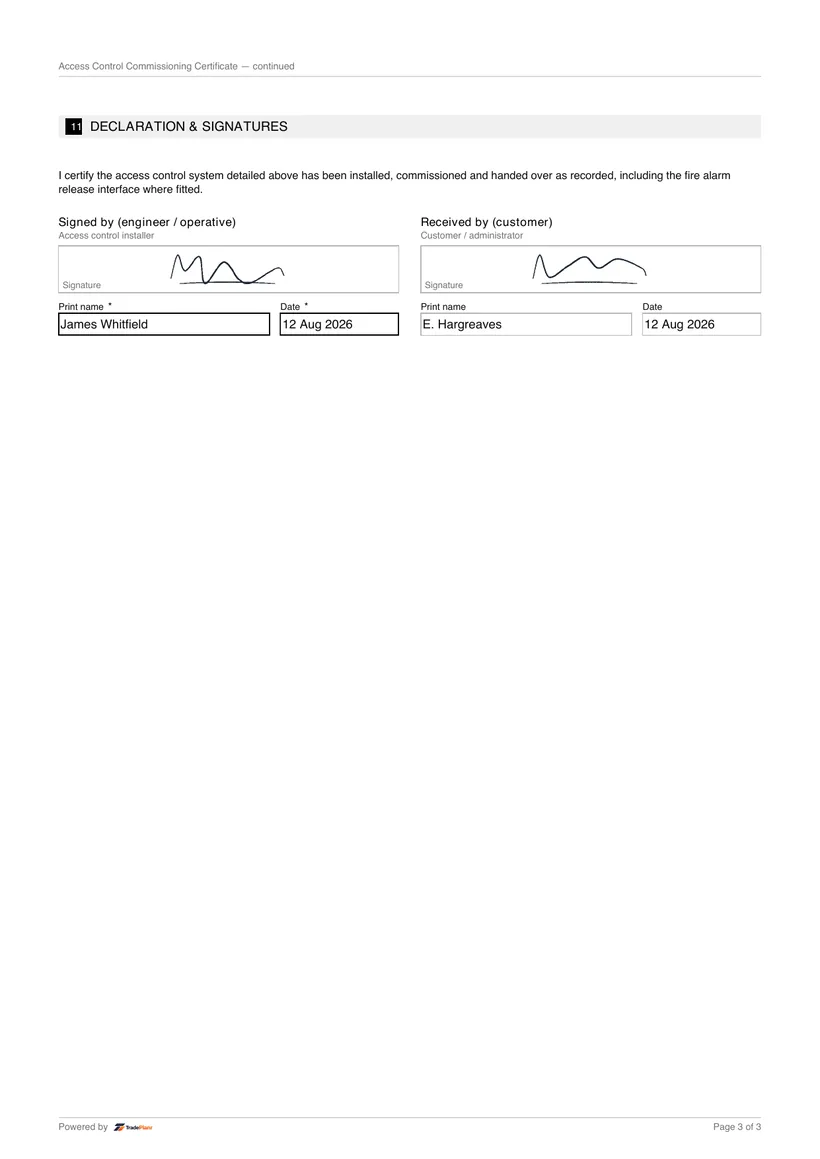
    Capture the customer's signature, add your declaration and generate a branded PDF certificate on site, with a copy stored against the job.

Issue this certificate from your phone or the web

TradePlanr generates this and 45+ other gas, electrical, oil, plumbing and renewables certificates as proper PDFs — filled on site, signed on screen and stored against the job. Works even with no signal. Free to start.

Frequently asked questions

What is the difference between fail-safe and fail-secure locks?

A fail-safe lock releases when power is lost, so the door can be opened; a fail-secure lock stays locked without power. Doors on escape routes are normally configured fail-safe so people can always get out, while fail-secure is reserved for doors where security must be maintained and escape is provided another way. The certificate records the configuration at every door.

Why must access-controlled doors release on the fire alarm?

If a locked door sits on an escape route, it must not delay people escaping. Approved Document B expects such doors to release for escape, and BS 7273-4 sets out how the fire alarm should actuate the release. Testing that interface at every door is the most important part of commissioning, which is why the certificate records it door by door.

What does the mains-fail test prove?

It proves how the system behaves when power is lost — that fail-safe doors release, fail-secure doors behave as designed, and the battery backup keeps the controller running for the intended period. Recording the result gives the building operator confidence in how the system will act in a real outage.

Who should hold the certificate after handover?

The responsible person for the building should keep it with their fire safety records, as it evidences how each door behaves in a fire and on power failure. You should also keep a copy on file against the job as your record of what was tested and demonstrated at handover.

Start Now — It's Free

Free to start · No card · No download needed — works in your browser

Download on the App StoreGet it on Google Play