

BS 5266-1

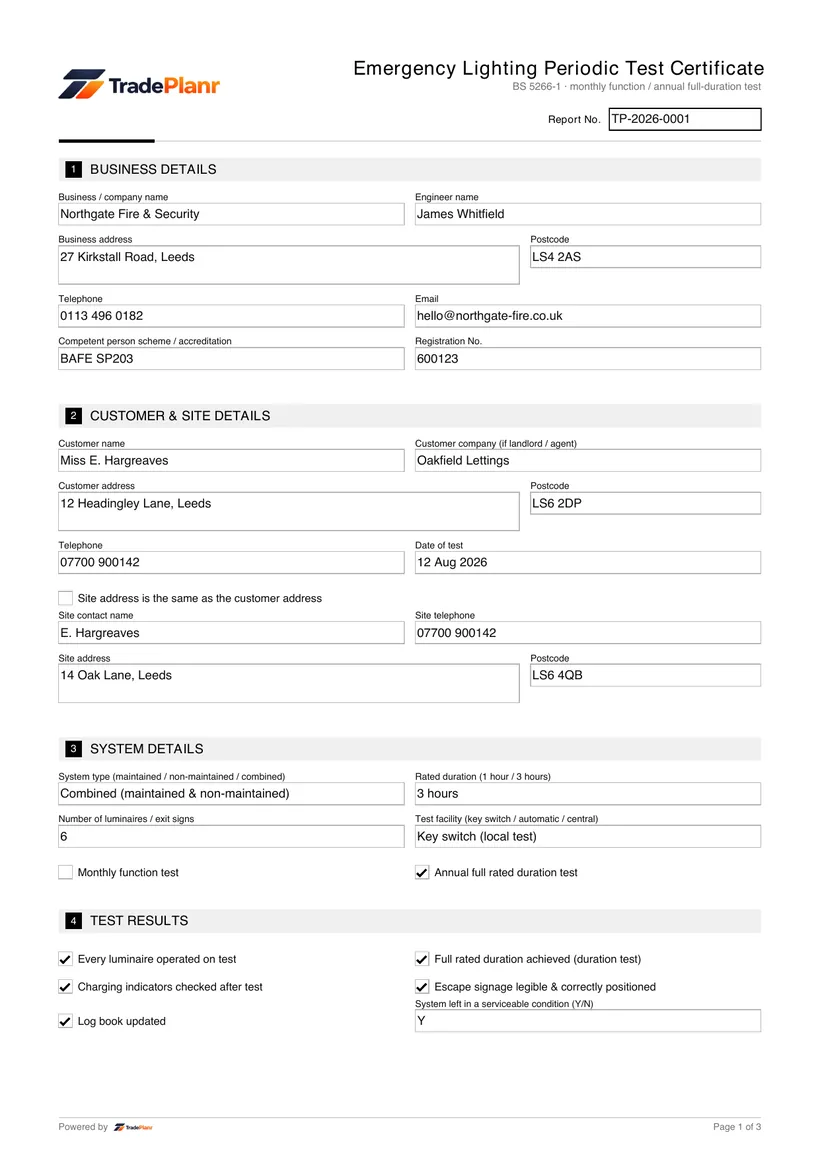
Emergency Lighting Periodic Test Certificate (BS 5266)

Fill it in on site, sign on screen, and send a professional EL Test PDF before you leave the job.

Free to build · Send it with a 7-day free trial

An emergency lighting periodic test certificate records the routine testing of an existing emergency lighting system under BS 5266-1. The standard calls for a brief monthly function test of every luminaire and exit sign, plus an annual test for the full rated duration, to prove the lights will actually work in a mains failure.

It is a different document from the completion certificate issued when a system is first installed. The responsible person for the premises must keep evidence that the system is being tested, and periodic test certificates are what fire risk assessors, enforcing authorities and insurers expect to see alongside the log book.

TradePlanr lets you record the test on your phone or tablet as you walk the building: log the system details, confirm every luminaire operated and achieved its duration, note any failures, and hand over a clean branded PDF before you leave.

What it covers

  • The premises, responsible person and testing company details
  • System details: maintained or non-maintained, 1 hour or 3 hour rated duration, and the test facility fitted
  • Whether this is a monthly function test or the annual full-duration test
  • Test results confirming all luminaires and exit signs operated when tested
  • Confirmation the rated duration was achieved and the luminaires recharged correctly afterwards
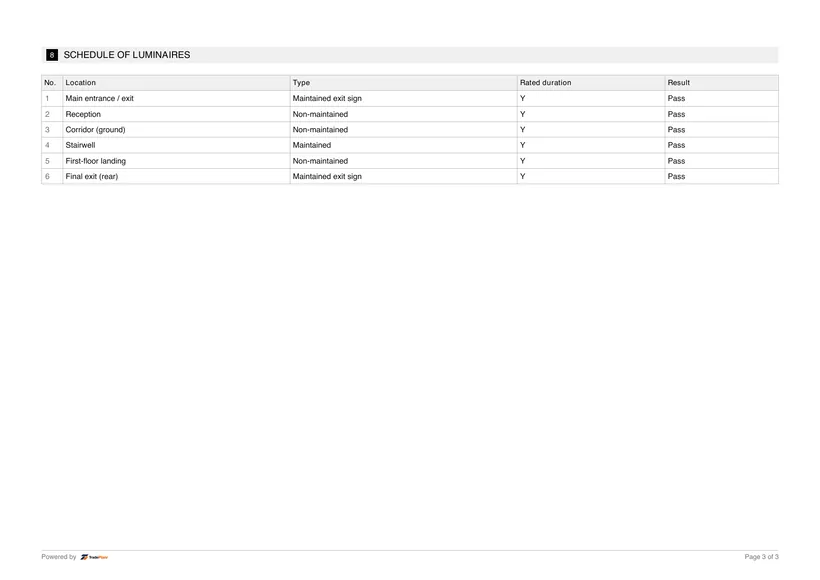
  • A luminaire-by-luminaire schedule with location and result
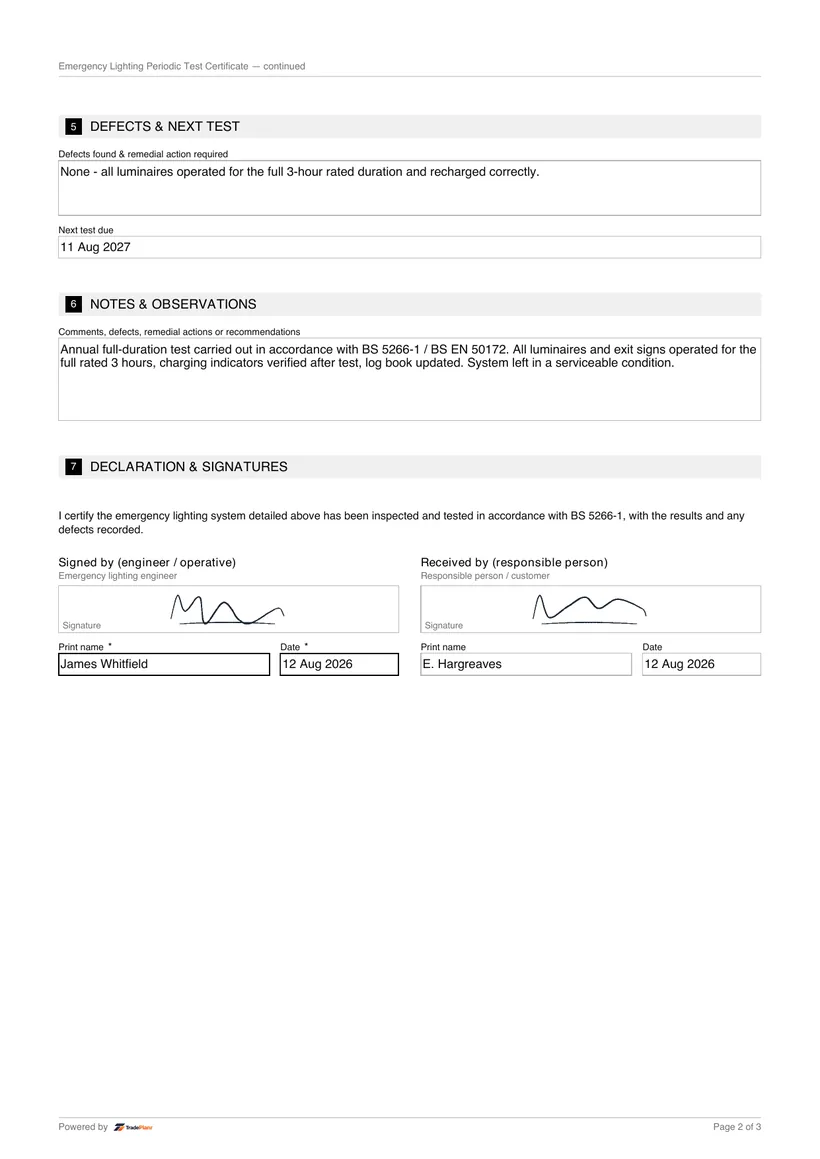
  • Defects found, remedial action needed and the next test due date

When it's required

BS 5266-1 calls for a monthly function test of every emergency luminaire and internally illuminated exit sign, and an annual test for the full rated duration, typically one or three hours.

The Regulatory Reform (Fire Safety) Order requires the responsible person to maintain emergency lighting, and periodic test certificates are the standard evidence that testing is actually happening.

Test records are routinely requested by fire risk assessors, licensing officers and insurers, so a certificate should be produced for each test visit and kept with the premises log book.

How to issue it in TradePlanr

  1. 1

    Enter the premises and system details

    Record the building, responsible person and your company, then log whether the system is maintained or non-maintained, its 1 hour or 3 hour rated duration and the test facility fitted.

  2. 2

    Run the test and record the results

    Simulate a mains failure, confirm every luminaire and exit sign operated, and for the annual test confirm the full rated duration was achieved and the batteries recharged.

  3. 3

    Complete the luminaire schedule

    Log each luminaire by location with its result, so any failed fittings are pinpointed rather than buried in a single pass or fail.

  4. 4

    Record defects and the next test

    Note any failures or defects with the remedial action needed and set the next test due date for the responsible person.

  5. 5

    Sign and send the PDF

    Add your signature, then generate a branded PDF to email to the responsible person and keep on file with the job.

Issue this certificate from your phone or the web

TradePlanr generates this and 45+ other gas, electrical, oil, plumbing and renewables certificates as proper PDFs — filled on site, signed on screen and stored against the job. Works even with no signal. Free to start.

Frequently asked questions

How often does emergency lighting need testing?

BS 5266-1 recommends a brief monthly function test of every luminaire and an annual test for the full rated duration, usually one or three hours. Each test should be recorded, with results kept in or alongside the premises log book.

How is this different from an emergency lighting completion certificate?

The completion certificate is issued when a system is designed and installed to BS 5266-1. This periodic test certificate records the ongoing monthly and annual testing of an existing system, including any failed luminaires and defects.

What is the difference between the monthly and annual test?

The monthly test is a short function test proving each luminaire lights up on mains failure. The annual test runs the system for its full rated duration to prove the batteries can still last the required one or three hours, then confirms they recharge.

Who is responsible for making sure the tests happen?

The responsible person for the premises under the Fire Safety Order. They often contract the testing to an electrician or fire safety company, and the certificate is the evidence that the duty has been met.

Start Now — It's Free

Free to start · No card · No download needed — works in your browser

Download on the App StoreGet it on Google Play